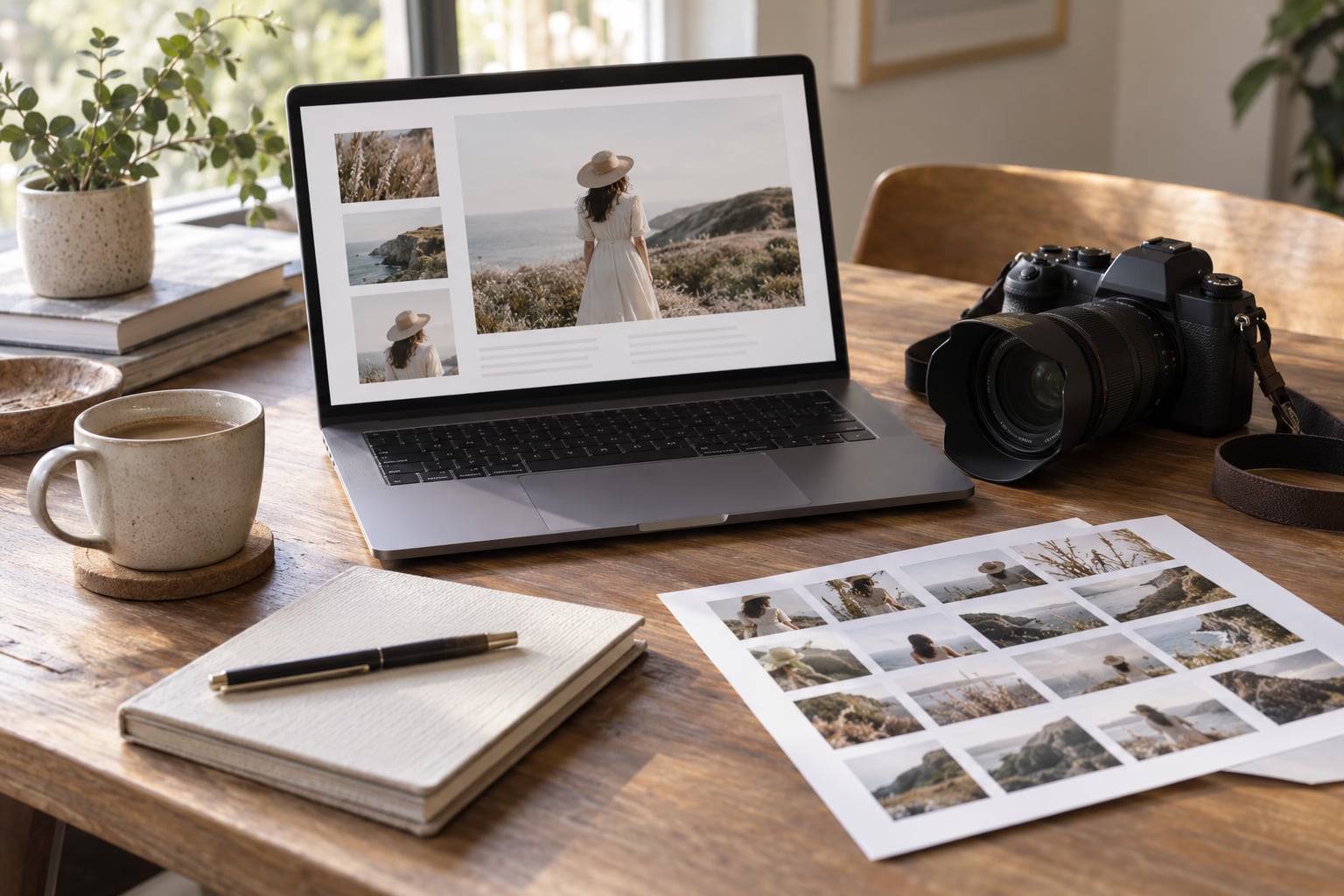
Blog about your photo sessions for SEO by picking one strong shoot, targeting a single keyword such as a venue name or city, and writing 300 to 800 words of original copy around a small gallery. Name the venue, the light, and the people in the title, the first paragraph, every heading, and every alt text. The images already exist, so the write-up is the only work left.
Most photographers already own the hardest part of this asset. The shoot happened, the venue has a name, the couple has strong feelings about the light. What sits unused afterwards is a folder of files and half a memory.
The forum consensus on photography and marketing boards is blunt about the rest: the posts that get found are venue and location specific, while generic pieces on topics owned by large wedding portals never rank. One photographer writing about that reality put a useful number on it – a simple list post covering seven venues brought 500 to 1,000 visitors a month and three or four inquiries. That is one post, doing local work every day for years.
Here is the workflow that gets you there.
Table of Contents
- What You Need
- Step-by-Step: How to Blog About Your Photo Sessions for SEO
- 1. Define the session story before you blog about your photo sessions
- 2. Find one primary search topic and related phrases
- 3. Plan a useful article structure
- 4. Write a direct opening that answers the search
- 5. Describe the people, place, and creative decisions
- 6. Add search-friendly image details and captions
- 7. Add internal links, proof, and a clear next step
- 8. Publish, check, and improve the post
- Common Mistakes
- Frequently Asked Questions
- Conclusion
What You Need
A session post runs on material you collect before you sit down to write. Anything you cannot source later gets skipped in the final draft.
- Shoot notes, captured on the day. A phone voice memo is enough: the venue, the time of day, what the light did, one quote, one problem you solved.
- A culled gallery. Twelve to thirty images is plenty for one post. More than that and the page gets slow and nobody scrolls to the end.
- Written permission. A signed model release or a clear yes in your contract before any real client image goes on a public page.
- Venue details. Name, room, and a sentence about where the light enters. This is the part readers actually search for.
- One target keyword. Pick it before you write a word, not after.
- A publishing baseline. Title tag, meta description, URL slug, and a way to see which posts get impressions in Google Search Console.
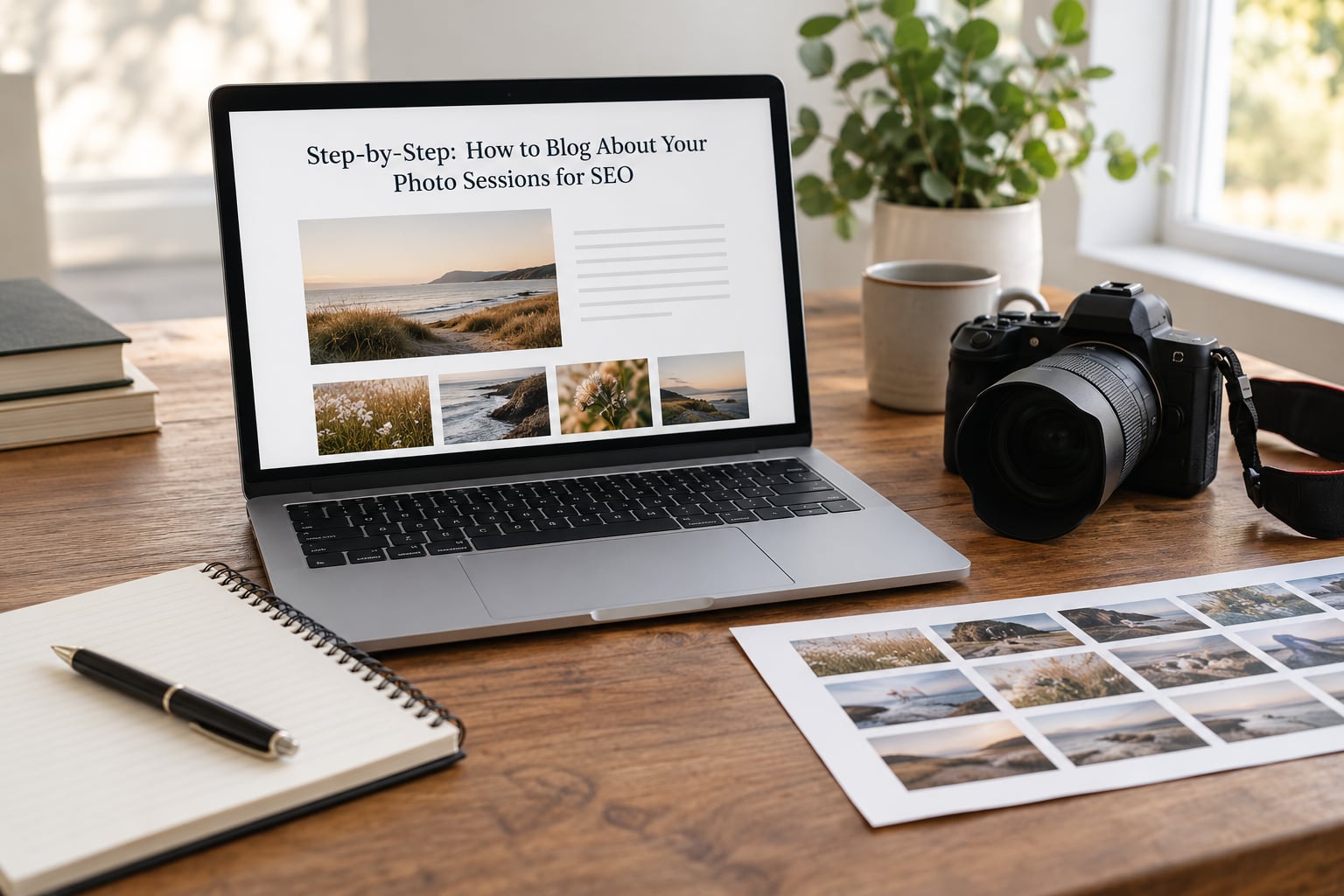
Step-by-Step: How to Blog About Your Photo Sessions for SEO
1. Define the session story before you blog about your photo sessions
Every shoot has one sentence at its centre, and most drafts bury it under a wall of captions. Write that sentence first, before any keyword research.
Ask four things: what was the occasion, where exactly did it happen, what did the light or the weather do, and what made this session different from your last one. That last one is the part competitors never write, because they were not there.
If you cannot fill in all four, the session probably is not worth a post yet. Move on.
2. Find one primary search topic and related phrases
One post, one keyword. The useful targets are almost always specific: venue name plus city, session type plus location, or a style plus a season.
Location terms are worth chasing over service terms. In one piece of keyword research published for wedding photographers, a venue-plus-city phrase drew roughly 3,600 searches a month while the more competitive photographer-plus-city phrasing drew around 880. Same city, completely different playing field.
Pull the related phrases that fall out of that topic and use them in headings and body copy. Do not repeat the exact phrase in every sentence. Readers notice, and search engines have read that trick for a decade.
3. Plan a useful article structure
Write your headings as questions before you write a sentence of prose. Four questions cover almost every session post: what happened, why the setting mattered, what you learned, and what a reader planning their own session can take from it.
Answer each heading in the first one or two sentences. That answer-first structure is the single cheapest formatting decision you can make, because it is what gets quoted when an AI search tool summarises your page.
4. Write a direct opening that answers the search
Open with a plain summary of the session in 40 to 60 words, name the venue and the city, and say what the post covers. No throat-clearing about how excited you are to share this one.
That opening paragraph does three jobs at once: it answers the query for Bing, it earns the featured snippet slot, and it gives an AI tool a clean paragraph to lift. Put the target keyword inside it naturally rather than as the first three words.
5. Describe the people, place, and creative decisions
This is where storytelling earns its place. Does it help your rankings? Partly. Mostly it is what makes a couple forward the post to their family, and that share is what brings backlinks.
Talk through the setting, the direction you gave, the compositions you chased, and the decisions that shaped the final frames. Keep the subject’s private details out of it. First names, venue, and feeling are enough, and a release covers the rest.
6. Add search-friendly image details and captions
Pick twelve to thirty images. More is not better here, because a session post competes with your gallery page, not with it.
Give every image alt text in plain words that describes what is actually in the frame, and mention the topic once – for example, an autumn wedding portrait session at a restored stone mill, not a stuffed keyword string. Rename the file before you upload, using the venue and city rather than a camera default. Export around 1900 pixels wide and keep each file under 1MB, with the whole page under about 20MB.
Add two or three sentences of context around the gallery so the images sit inside readable copy.
7. Add internal links, proof, and a clear next step
Link the post to your service page, to the full gallery, and to one related older post. Three links is plenty; a session post is a spoke, not a hub, so it should point at your main pages rather than collect links of its own.
Add something checkable – how long the session ran, where you positioned the subjects, what you would change next time. Then close with one clear invitation to see the full series or book a similar session.
8. Publish, check, and improve the post
Before you hit publish, check the title tag carries the keyword, the meta description reads like a person wrote it, the URL slug is short, the headings run in order, and every image has alt text.
Check the page on a phone. Session posts get opened from a link in an email more often than from search.
Then give it two weeks before you judge it. Look at impressions and clicks in Search Console rather than day-to-day traffic, and refresh older session posts the same way – updated images, fresh date, one new paragraph. Reposting a winner is faster than writing a new one.
Common Mistakes
These come up over and over on photography forums, and each one has a simple fix.
- Publishing a gallery with no words. Seventy images and no copy tells a search engine nothing. Three hundred words and twelve images beats it every time.
- Stuffing the keyword. Read it aloud. If it sounds like a person wrote it, keep it; if not, cut it.
- Alt text written as a keyword list. Describe the photograph. A screen reader user and an image model both want the same thing – what is in the frame.
- Writing for everybody. Generic session content loses to local and venue-specific content every time.
- Skipping permission. Get the release before the post goes live, not after someone flags it.
- Leaving internal links out. A session post with no path to your service page is a dead end for both readers and crawlers.
- Never updating old posts. The cheapest ranking win on most photography blogs is a session recap from two years ago with new images and one added paragraph.
One more worth naming: keyword cannibalization. Two session posts from the same venue, both chasing the same venue keyword, end up competing with each other. Pick one to target the venue term and let the others chase distinct angles.
Frequently Asked Questions
How long should a photography blog post be?
Aim for 300 to 800 words of original copy around the gallery. That range is enough to name the venue, the city, the session type and your creative decisions without padding. Under 300 words you are usually left with a caption block, and over 800 the reader rarely finishes. A short post that answers one question well beats a long one that covers five badly.
Should I write a blog post for every session I shoot?
No, and pretending otherwise is how most photographers end up with a backlog they never touch. Post the sessions with a recognizable venue, an unusual location, a strong story, or a client whose work you want shown off. A photographer shooting hundreds of weddings a year should expect to publish a handful of carefully chosen recaps, not every single one.
What alt text should I use for photos on a photography blog?
Describe what is in the frame in plain words, then mention the topic once. For example: autumn wedding portrait session at a restored stone mill. Say who, where, what is happening and what the light looks like. Skip keyword lists and camera defaults, because screen reader users get a bad experience and image models learn nothing useful from them.
Does storytelling in a photography blog actually help SEO?
Partly. The words themselves help, but the bigger effect is indirect: a good story makes the couple share the post, and that share brings backlinks and real traffic back to you. Photographers report that venue and location specific posts get found, while generic pieces on broad topics rarely move. Story plus specificity is the combination that works.
How often should a photographer publish blog posts?
Consistency matters less than you think. One well-built session post a month beats five thin ones, and two a month beats a burst of ten followed by silence. Refresh older posts before you write new ones, since an update to a post that already has impressions is usually the fastest ranking gain available to a small photography site.
Conclusion
Open the folder from your most recent shoot and write the one-sentence story for it. That is the first action, and it takes about five minutes.
Everything else follows from that sentence: the keyword, the headings, the alt text, the link to your gallery. A strong session post is not a marketing document. It is specific writing about a real afternoon, structured so search engines and readers can both find what they came for.