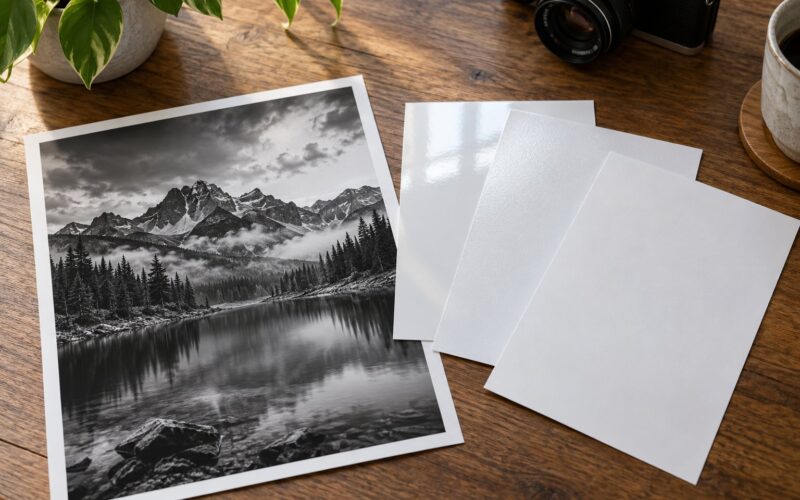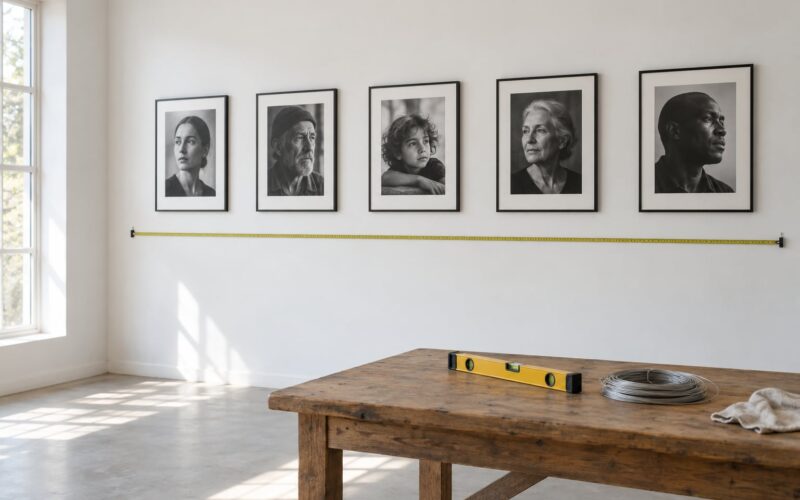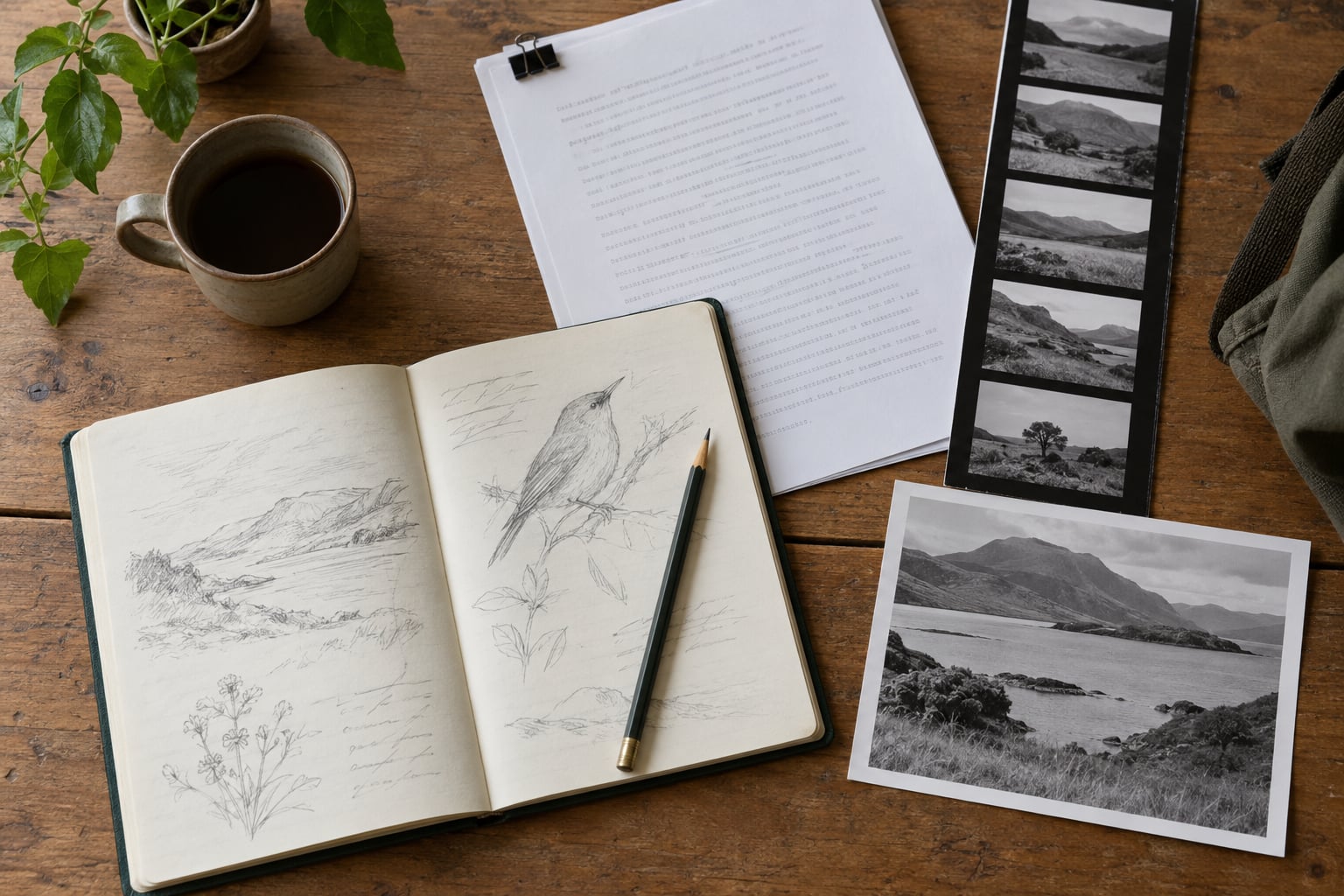
A documentary photo caption is a short factual statement that identifies who is in the frame, what is happening, where and when it took place, and why the moment matters. Learning how to write captions for documentary photos comes down to one rule: everything you write has to come from a record you can point to.
The image itself carries none of that. A frame freezes one second from one angle with no names, no dates and no explanation, so the caption is the only thing turning it into a usable piece of information. Get it right and the photograph becomes usable in a publication, an archive or a courtroom. Get it wrong and you have misrepresented a person who trusted you.
Below is the workflow I use, the material you need before you start, the mistakes that recur most often, and how the same caption changes shape depending on where it lands.
What You Need Before You Write a Single Word
Most weak captions are weak because the writer was guessing. You cannot add verified context to a photograph if nothing in your records supports it, so gather your material first.
- The frame and its file. Open the RAW file and check the EXIF data for the capture date, time and GPS coordinates. This is the hardest evidence to argue with.
- Your field notes from that day. Names, approximate times, who said what, what happened just before and just after the shutter fired.
- A contact sheet or frame index. A numbered proof sheet lets you tie each image to its note. Series get mixed up otherwise, usually at the worst moment.
- Interview records and their consent status. A transcript, a voice memo or a written summary, plus a note of whether the person agreed to be quoted.
- Verification sources. Public records, the news archive, the organisation’s own statements, a second witness, or the metadata a stranger handed you.
- Existing paper. Prior captions, releases or model releases, and any place the photograph has already run.
Photographers who work this way tend to keep notes in the field rather than afterwards. Henri Cartier-Bresson was described as scribbling names and facts into a notebook on the spot, then expanding them into narrative later, and that habit is the reason his sequences still read coherently decades on. The notebook is the raw material for the caption.
Step-by-Step: How to Write Captions for Documentary Photos
Start with the visible facts you can prove
Before you interpret anything, write down what the camera actually recorded. Clothing, weather, signage, the number of people, the light direction, the objects in their hands. These are claims the image supports on its own.
Then mark everything else as assumption. “The woman is a nurse” is an assumption unless a badge, an interview or a colleague confirms it. Separating the two lists early keeps you from smuggling interpretation into what looks like a factual record.
A useful test: if a magazine printed the caption alone, without the photograph, would a reader be able to check the claim? “A woman in scrubs leans against a hospital corridor wall” passes. “An exhausted nurse takes a break after a double shift” does not, because the exhaustion and the shift are both your reading of the moment.
Add verified context
Now layer in the names, dates, places and events that your records support, and nothing more. Precision has to match your evidence. Claiming a specific day when you know only the season is a small lie that grows when someone else repeats it.
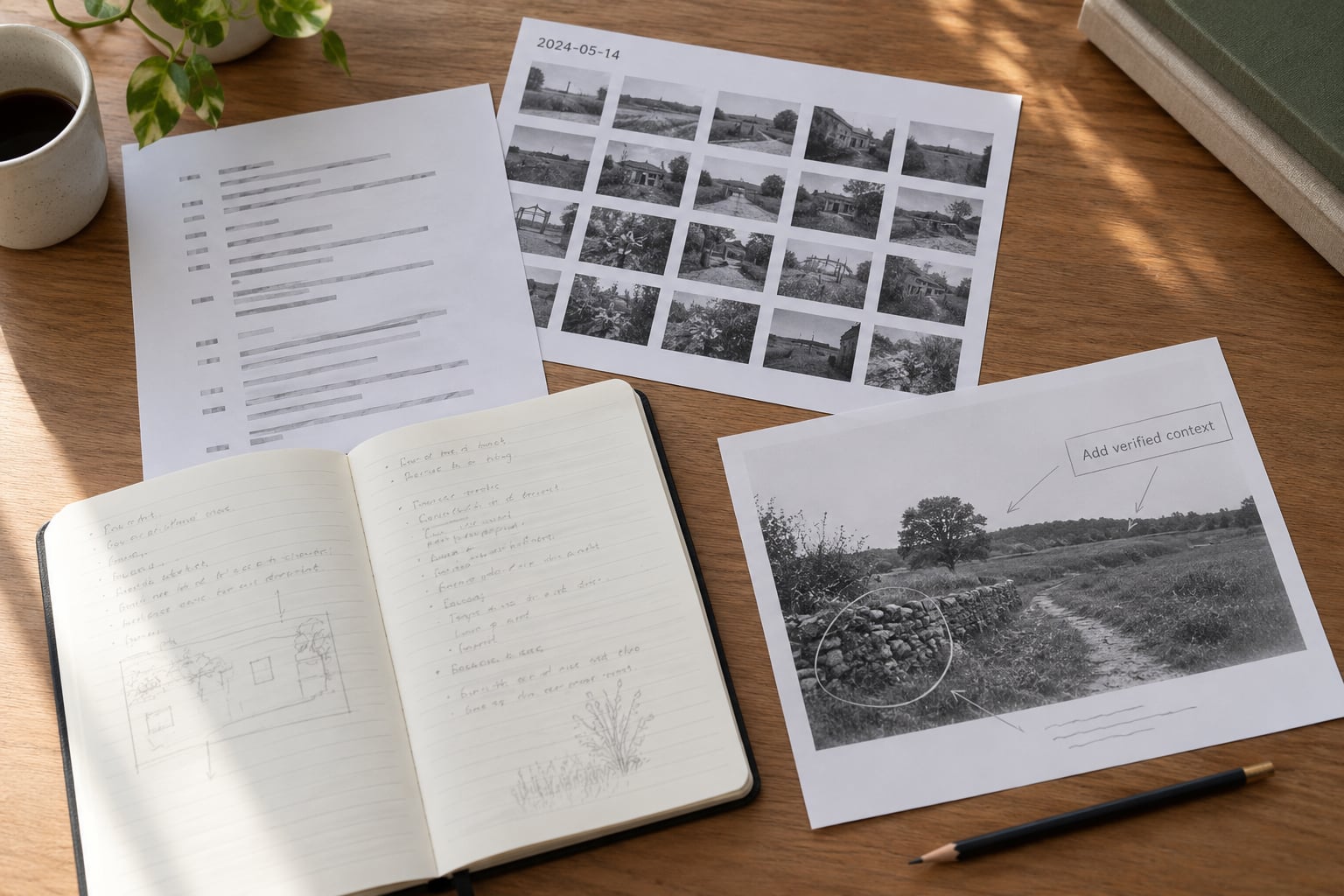
Here is how I match the claim to the certainty behind it.
| What your records support | How the caption words it |
|---|---|
| EXIF timestamp, witnessed event | “On March 4, 2026” |
| Confirmed date, approximate time | “On the morning of March 4, 2026” |
| Month only | “In March 2026” |
| Season only | “In the spring of 2026” |
| Date tied to a known event | “During the March 4 demonstration” |
| Second-hand source, unconfirmed | “Reported to be…” or “Believed to be…” |
The National Press Photographers Association puts accuracy and context at the centre of what captioning is for, stating that consistent, accurate image captioning educates viewers about the context and intent of an image. That is the standard, and it is a written professional position rather than a personal preference.
Attribute anything you did not witness yourself. If a second photographer’s frame establishes the location and you are writing about your own image, say where the detail came from. If you rely on a caption that already exists, credit it rather than laundering it into your own voice.
Explain why the moment matters
The five W’s are a checklist, not a paragraph. Once who, what, where and when are settled, one sentence tells the reader why this frame and not the four hundred others from the same assignment.
The usual failure is an explanation that restates the picture. “The firefighter carries a child out of the burning building” is what the eye already reports. “The firefighter carries a child out of the apartment she watched burn for eleven years” gives the reader the reason the frame was worth making.
Keep the reason factual too. “She watched it burn for eleven years” is a claim, and it needs a source just as much as a name does.
Write for a reader who saw nothing
Write in the present tense and the active voice. A caption describes what the image shows, not what happened to the photographer’s feelings while photographing it. Short sentences are the standard for a reason: photojournalism training material puts the average caption sentence at roughly 15 words, because captions get read on a phone in bad light.
Drop everything the reader can see unaided. Counts of people, colours, the fact that it is raining, the direction someone is facing. Use them only to distinguish between two similar frames, and then only once.
One more habit worth keeping: write the caption without the picture in front of you. If it stops making sense, or turns into a description of the image, you have drifted into alt text.
Check language, consent and accuracy before you publish
Run this list before the caption goes anywhere:
- Every name traces back to a record or a person who confirmed it.
- Every date matches the precision table above and nothing more.
- Every quote matches the transcript word for word, and the speaker agreed to be quoted.
- Emotion is not asserted. “Appears tired” is defensible; “is grieving” is a verdict on someone you photographed for a moment.
- Nothing identifies a minor, a patient, a victim or a person in legal trouble unless the situation was discussed and agreed.
- Any reconstructed or re-staged element is stated as such.
- Alt text is written separately and describes the picture, not the story.
- A second person reads it without the photograph and tells you what they think it shows.
That last check catches more errors than the other seven combined. Fresh readers have no attachment to your intentions.
Match the caption to where it will appear
The facts stay identical across formats. What changes is length, placement and how much of the background you can carry.
| Output | Typical length | What it carries |
|---|---|---|
| Print magazine or newspaper | 25-60 words | Full five W’s, present tense, agency or credit line |
| Portfolio or website | 40-90 words | The same, plus a sentence on the series’ purpose |
| Gallery wall label | 60-120 words | Series context, place, timeframe, photographer’s approach |
| Archive or catalogue record | Structured fields | Date precision, creator, rights, source, keywords, caption, alt text |
| Social post | 1-2 sentences | Identity, action, place, date. Context moves to the first comment |
| Print or book caption | 15-40 words | Identification and date, credit set separately as a line |
Two terms come up constantly and get confused. A cutline is the short identification line attached to an image in news layout. A credit line is the separate statement naming the photographer and any agency. Neither replaces the caption, and neither is the caption.
For archives and large series, write your captions into a spreadsheet with one row per frame and a fixed column set: frame number, capture date, location, people, verification source, caption, alt text, rights, restrictions. Consistency across 300 rows is what makes a series searchable years later, and it is far easier to fix a wrong date in a table than in a finished layout.
Common Mistakes and How to Fix Them
Six errors account for most of the captions that fail an editor, and they are the same six I keep seeing when photographers search how to write captions for documentary photos. Each has a direct fix.
1. Guessing an identity. “An unhoused man reads outside a shelter” becomes a claim you cannot support when the shelter does not exist. The fix: leave identification out, or write “believed to be” and note your source. If identity matters to the story, ask, and record the answer.
2. Asserting an emotion. Photographers reach for feeling because it reads well. “She is devastated” tells the reader what happened inside a person nobody asked. The fix: describe the visible behaviour and let the reader draw the conclusion, or attribute the feeling to a quote.
3. Repeating the image. Caption-after-caption, a reader gets a stock description of what the photograph plainly shows. The fix: delete every clause that adds nothing a sighted reader would not have reported, then check the sentence still stands.
4. Vague chronology. “Recently” and “that year” age badly and cannot be verified. The fix: use the precision table. If the month is unknown, anchor to the event.
5. Omitting the why. A full five W’s minus the reason produces a list, not a caption. The fix: one sentence explaining why this frame belongs in the series.
6. Stating unverified claims flatly. “Police raided the apartments” reads as fact when it is still one person’s account. The fix: name the source inside the sentence.
Here is the same frame written badly and written properly.
| Weak caption | Strong caption |
|---|---|
| A sad woman standing outside a closed shop in the rain on a street somewhere. | Marisol Vega, 34, stands outside her closed bakery on Calle Nueve in Managua after police sealed the block on March 4, 2026. Her lease had not been renewed in eleven months. |
| Firefighters at the scene of a blaze. | Firefighters carry a child from an apartment at 14 Rowan Court on March 4, 2026. The building had been empty for six years; the family had returned that morning to collect belongings. |
The second column is not more emotive. It is more specific, and every added detail came from a document, a witness or the metadata.
Frequently Asked Questions
What are the rules for captioning?
Four rules cover most cases. Write in the present tense and active voice. Answer the five W’s in order: who, what, where, when, why. Keep sentences short, around 15 words on average, because captions are read on small screens and in poor light. Match your certainty to your evidence, using wording like ‘reported to be’ when a fact is unconfirmed. Never assert an emotion or an identity you did not verify.
How long should a documentary photo caption be?
Between 25 and 60 words for print, 40 to 90 for a portfolio, and 60 to 120 for a gallery label, where the series context is doing real work. Social posts take one or two sentences with the background moved to the first comment. Length follows format, never accuracy: cut words freely, but never cut a fact or soften a claim you cannot support.
Can you give me an example of a caption for a documentary photo?
Here is a full one. ‘Marisol Vega, 34, stands outside her closed bakery on Calle Nueve in Managua after police sealed the block on March 4, 2026. Her lease had not been renewed in eleven months. Photograph by the author.’ That covers who, what, where, when and why in 30 words, and every element traces back to a record.
How do I give credit for an image?
Put the credit on its own line, separate from the caption: the photographer’s name first, then any agency or syndicate, then any collection or source you hold rights through. When you rely on someone else’s account of a scene, credit that source in the sentence itself. Starting photographers are usually pointed to the AP caption style guide as the working template for all of this.
What is considered documentary photography?
Photography that records real events and real people without staging them for the camera, presented as a sequence or body of work rather than a single image. It differs from photojournalism mainly in context: photojournalism is work made for a news outlet against a deadline, with a cutline and a wire-style caption. Documentary work is usually slower and shaped by the photographer’s own interests.
Should documentary photos have captions?
Yes, unless the series is explicitly silent and the editor has agreed to that. Readers do ask whether captions explain the work and end up dictating it. The usual compromise is to keep captions factual and short so the image still leads, with the longer social and historical background living in a companion note or an accompanying essay.
Conclusion
How to write captions for documentary photos comes down to a two-part move: write the caption from the facts you can prove, then add only the context the audience needs to understand the frame. Start with the visible evidence, layer in names, dates and places only where your records support them, and finish with one sentence on why the moment matters.
Everything else, length, format, tone for social or gallery, can be adjusted later. Accuracy cannot.