Learning how to photograph toddlers without bribes comes down to one switch: stop directing your child and start playing with them. Toddlers do not understand posing, but they understand tag, races, peek-a-boo and being chased, and the frames worth printing come out of that play. Ten minutes, soft light and a camera set up before anyone arrives is realistically all you need.
There is a definition worth settling early. A genuine smile lifts the cheeks, crinkles the eyes and arrives half a second late. A cheese smile is a held shape your child makes because you asked for one, and once a toddler learns that the camera means the word “cheese,” you have to work against that conditioning every time.
A candid frame is one your child was not aware of. A posed frame is one where somebody told them what to do with their face. Nearly every technique below moves a frame from the second column to the first.
Table of Contents
- What You Need
- Step-by-Step: Photographing Toddlers Without Bribes
- Common Mistakes When Photographing Toddlers Without Bribes
- Frequently Asked Questions
- What can I use instead of bribing a toddler to sit for photos?
- How long can a toddler tolerate a photo session?
- How do I photograph a shy toddler who will not look at the camera?
- Should I bring toys and snacks to a toddler photo session?
- What is the best time of day to photograph a toddler?
- How do I get natural expressions from a toddler without forcing a pose?
- Conclusion
What You Need
You need very little, and the list matters less than most gear articles would have you believe.
- A camera with continuous autofocus and a fast burst. Any recent mirrorless or DSLR body does this. A phone with a fast burst works fine too, which tells you how little the body is doing for you.
- A short lens you can back away from. A 35mm or 50mm prime gives you room to frame without shoving the camera in your toddler’s face. A zoom is useful only because it lets you stay put.
- Open shade or a big window. Direct sun makes squinting toddlers. Open shade under a roof, a covered porch or a window facing the brightest part of the sky gives soft light you can shoot in all afternoon.
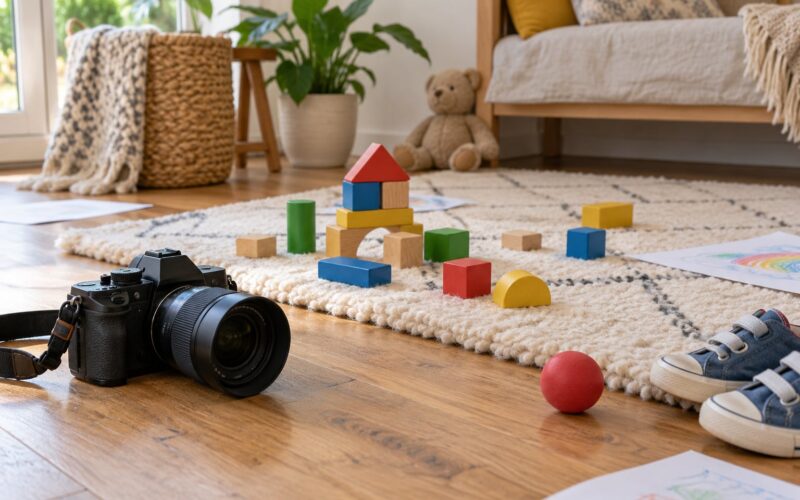
- A familiar toy and a clear patch of floor. One object your child already loves, and ten feet of space with nothing breakable in it.
- A second outfit. Grass stains, juice faces and melted snacks happen. A spare in a bag ends the session early.
What you do not need: a studio, a backdrop, a reflector, a lens with a brand name on it. The two things that decide whether you get the frame are the light and whether your child is having fun.
Step-by-Step: Photographing Toddlers Without Bribes
1. Prepare a Familiar, Low-Pressure Setting
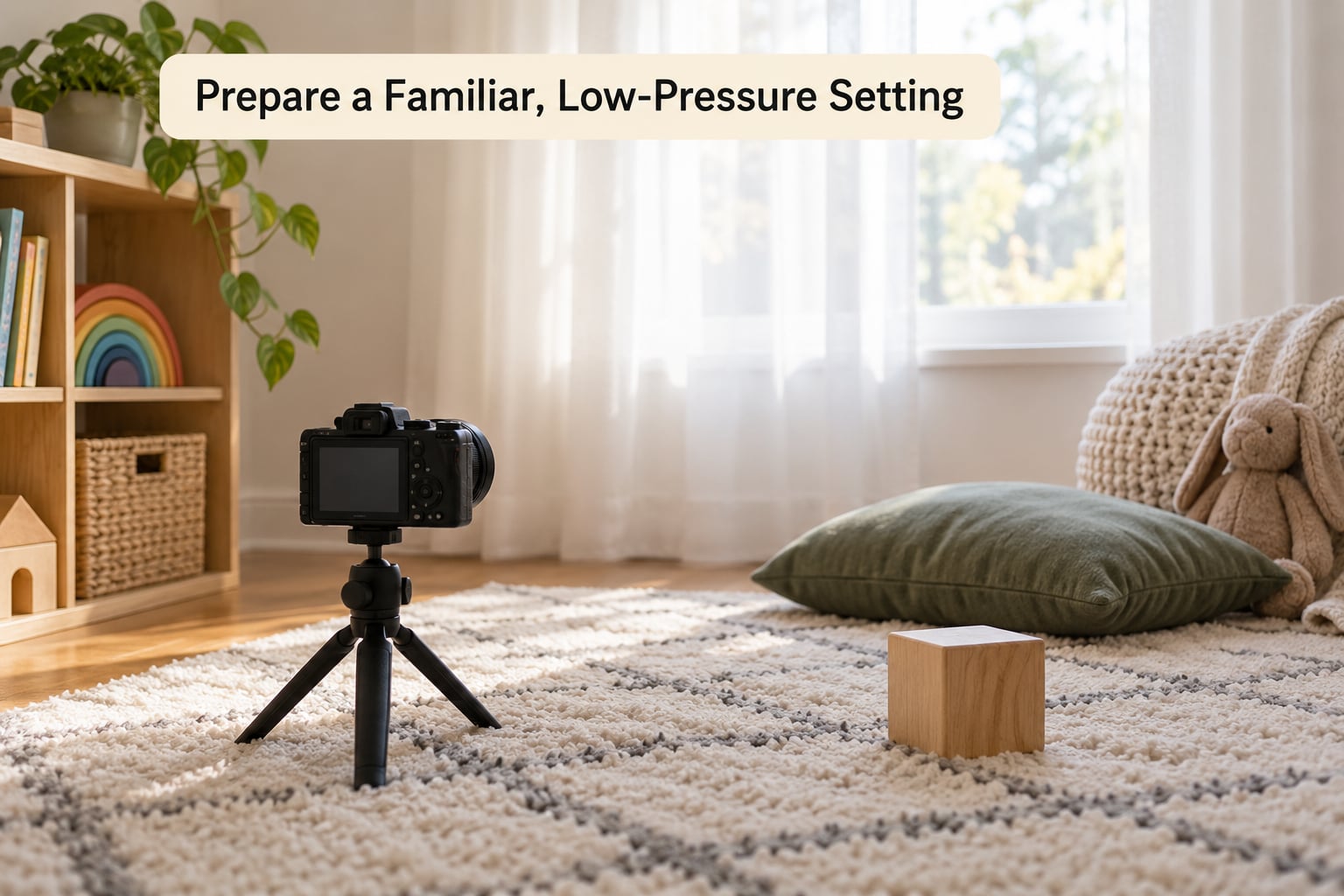
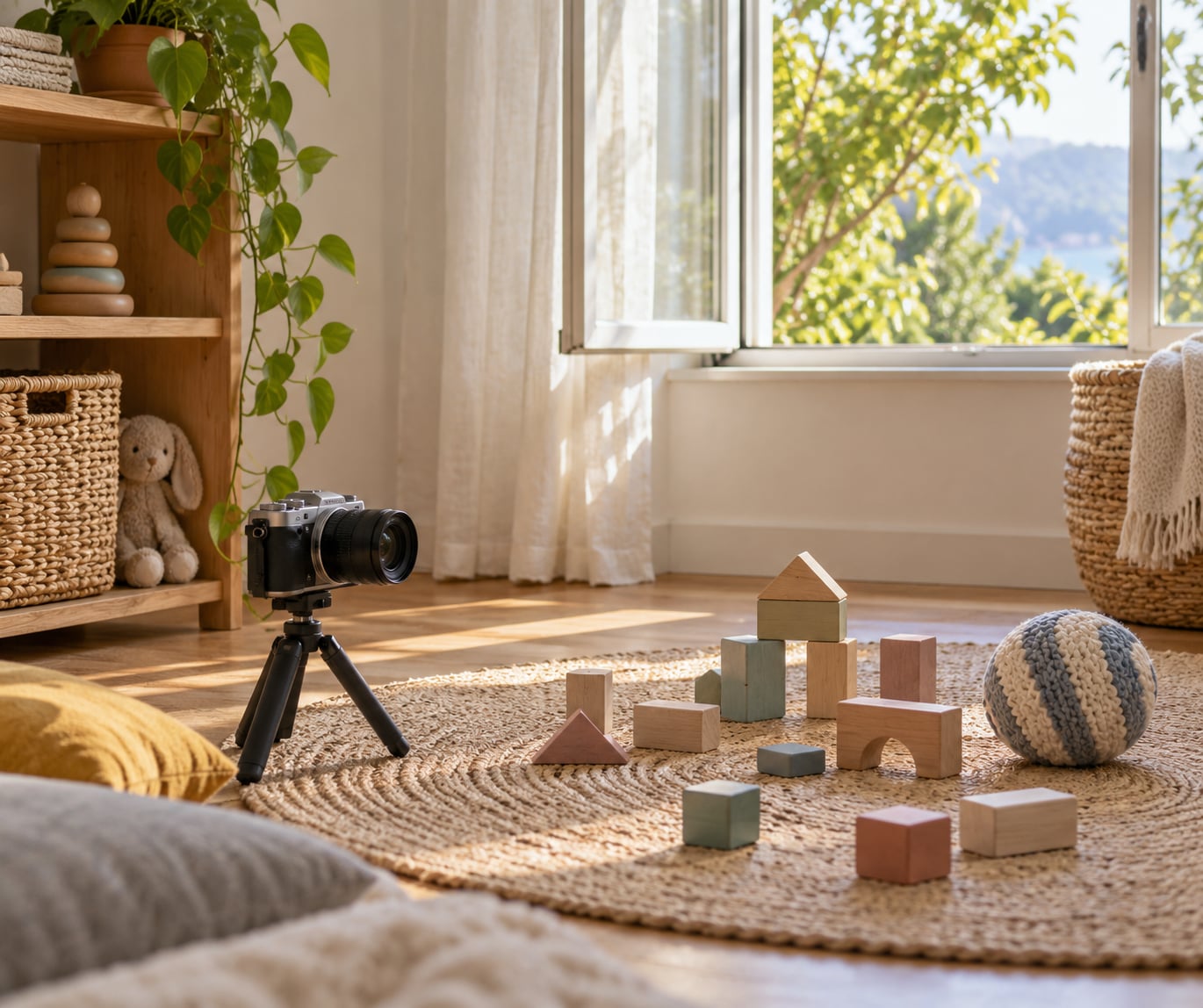
Pick a room or spot your toddler already plays in. Novelty reads as scrutiny, and a toddler who has never seen the living room turned into a photo studio will treat it like one.
Then do the setup before they arrive. Set the camera on a tripod, dial in your settings, compose the shot you want with an adult standing in, and only then call your toddler over. Ten minutes of setup buys you twenty minutes of child that are not spent wondering what is happening.
Clear the frame of anything busy: a drying rack, a pile of mail, a busy rug pattern, a neighbour’s fence right behind their head. You cannot fix a distracting background in editing, only crop around it.
You will know the setting worked when your toddler walks in and keeps doing what they were already doing.
2. Let the Toddler Settle Into Play
Open with something they already enjoy and do not mention the camera. Building with blocks, pouring water in a bowl, opening and closing a cupboard door twenty times. That is not wasted time, it is your footage.
Shoot wide at first. Get low, sit on the floor or kneel so the camera is at their eye level rather than looking down at the top of a head, and let them forget you are there.
Stay quiet for a full minute before you say anything. The first honest expressions usually arrive between the second and fourth minute, once your child stops checking whether you are watching.
3. Use Playful Prompts Instead of Bribes
Each of these prompts works because it gives your toddler a reason to move, look up or laugh that has nothing to do with obeying you.
- Tag and chase. You run, they run. Fast shutter speed makes this work, and the running frames are the good ones.
- Peek-a-boo. Hide your face behind a cushion or your hands. The laugh on the reveal is genuine every single time.
- Races. Race them to the door, the sofa, the other end of the room. Toddlers love an unfair advantage and take it seriously.
- Silly words. Skip “cheese” and use a nonsense word nobody in the house uses. “Pickle” or “wombat” gets you a real smile where “cheese” gets a grimace.
- The butterfly in the lens. Tell them there is a butterfly sitting on the camera. Parents on photography forums call this the most reliable eye-contact trick there is, and it works because toddlers are curious about small living things.
- A fake laugh. Start laughing at nothing with an exaggerated face. Most toddlers will want to know what is so funny, and the answer comes out as a genuine laugh.
- Give them a job. Hand them the toy to hold up, tell them the dog needs watching, or ask them to find something blue. Busy hands and a purpose relax the face.
- Show them the back screen. Turn the camera around and show a frame they will like. Toddlers are camera aware and eager to review shots, which turns the session into something they are running rather than receiving.
Say a prompt once. If it lands, fine. If it does not, switch games rather than repeating it a second time, because repetition is what teaches a child that words are orders.
4. Follow Movement Instead of Forcing a Pose
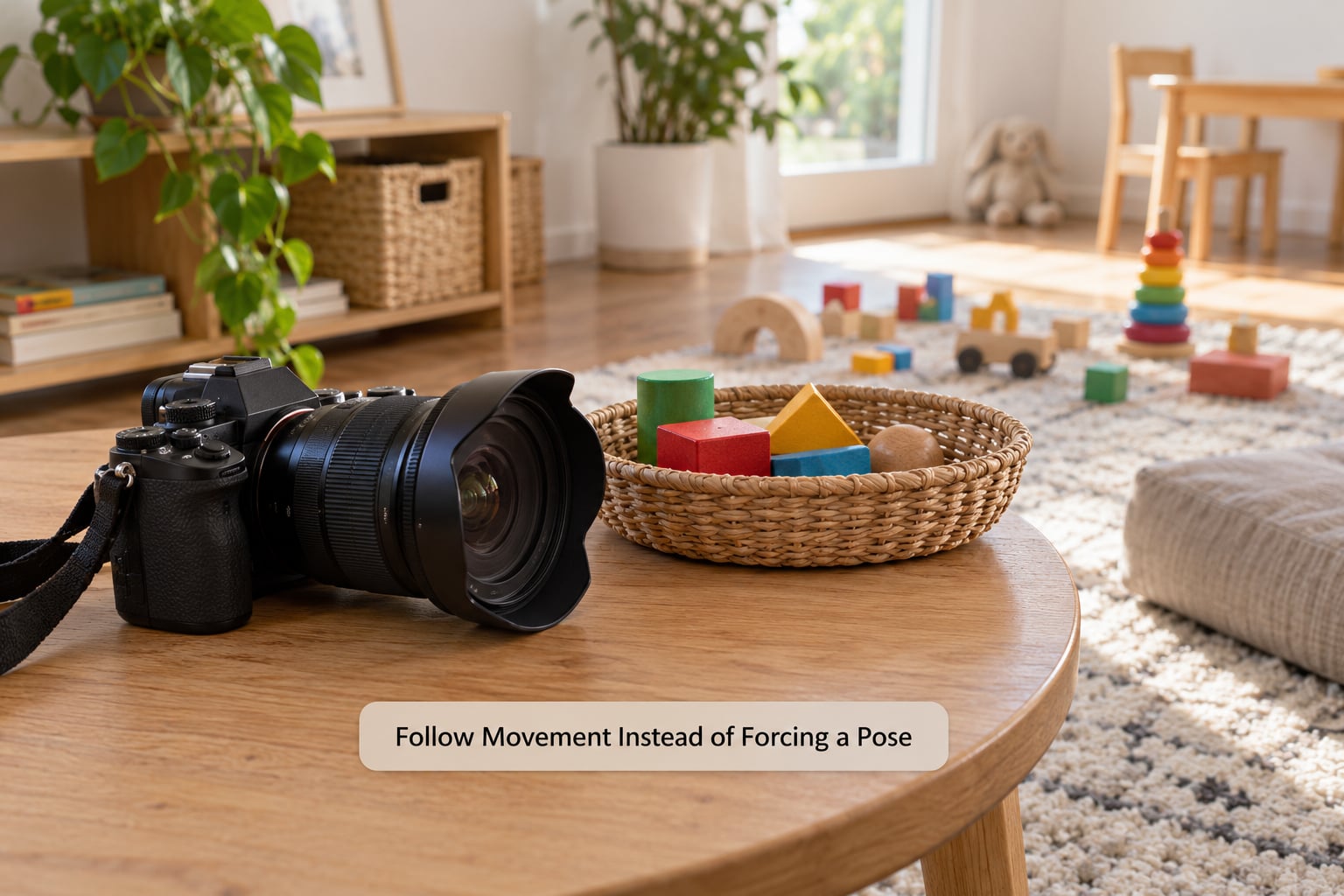
Toddlers are not slow, they are fast in short unpredictable bursts, and your settings have to assume the worst one. Switch to shutter priority and start at 1/1000 second. Raise ISO rather than dropping the shutter.
Turn on continuous autofocus so the camera keeps tracking while your toddler crosses the room, and shoot in short bursts of five or six frames rather than holding the button. The peak expression lasts a fraction of a second.
Open the aperture as far as your lens goes, usually f/1.8 to f/2.8, so a toddler who darts behind a toy still has an in-focus face. If you want both children sharp, stop down a little and raise ISO instead.
Back-button focus helps when there is room for it: set focus on the spot your toddler will occupy, then hold the button and re-focus as they cross. A flip-out or tilting screen lets you frame from floor level without lying in the grass.
One note from parents and shooters alike: the technical settings decide whether the moment is captured at all. Enthusiasm gets the moment to happen. You need both.
5. End the Session Before the Tantrum
Watch for the tells. Whining that was playful a minute ago, the jaw going tight, hands over the face, a toddler who has started asking who the camera is. That is your five-minute warning.
Wind down rather than stopping. Say the session is finished, then immediately do one last thing that is not a photo: a cuddle, a snack at the table, a game you deliberately do not photograph. Leaving on a good moment is what makes the next attempt easy.
If you want a few guaranteed frames in the bag, do the whole family first and the toddler second. The group shot warms your child up, and you already have usable pictures before the hard part starts.
Keep the crying frames and the silly faces. About a year from now those are the ones that matter, and parents who deleted them regret it every time.
Common Mistakes When Photographing Toddlers Without Bribes
Most failed toddler photos come down to six repeated habits. Each one has a straightforward fix.
Repeating the same instruction
“Look at me, look at me, look at the camera.” Every repeat teaches your toddler that the camera is a demand, and demands get refused. Say a prompt once, then go back to play. If it did not work the first time it will not work louder.
Photographing at the wrong hour
Shoot before the nap, not during the pre-nap crankiness window and never straight after a wake-up that ran late. Morning light is softer and toddlers are more alert before they have been awake for a full meal and a story. Midday sessions indoors still work; midday sessions outdoors at a playground do not.
Offering snacks or screens as the deal
Snacks make a mess, they show up in the photos, and they start an expectation that photographs equal treats. Screen time is worse because the child is looking at a screen instead of you. Parents report the same pattern repeatedly: the first bribe works, the second needs a bigger one, and by the third session there is a meltdown when the promised reward is delayed.
Asking a toddler to hold still
Nobody holds still at two. The fix is movement instead: tag, races, spinning, throwing a ball back and forth. A wide aperture and a fast shutter let you shoot a child in motion and still get a sharp face.
Choosing a location full of distractions
Playgrounds, shopfronts and anywhere with other children pulling at your toddler’s attention will beat you. Pick open space, a quiet corner of the garden, or an empty stretch of beach where there is nothing to compete with you.
Chasing attention and staying tense
Toddlers mirror adult stress within seconds. If you are hurrying, snapping and counting shots, your child reads the room and shuts down. Set a ten-minute timer, put the camera on the tripod, and let yourself wander too.
| What happens | Why it happens | The bribe-free fix |
|---|---|---|
| Covers their face or turns away | The camera is a stranger demanding something | Put the camera down for a minute. Become boring, not interesting, and try again from further away |
| Will not look at the lens | Direct eye contact on demand feels strange | Butterfly in the lens, a silly word, or catch them mid-laugh instead of asking |
| Cries or melts down | Over-tired, hungry, or the session ran past the limit | Stop. Feed them, change the activity, or stop for the day and try the next morning |
| Runs out of frame | Something more interesting exists than you do | Reframe wider and let them come back to you on their own terms |
| Sibling chaos | Two attention spans competing for one adult | Photograph one at a time while the other is happily occupied |
| Blurred or missed expressions | Slow shutter speed and single-shot focus | 1/1000 second, continuous autofocus, short bursts of five or six |
| Face squinting in bright sun | Direct light makes anyone squint | Move into open shade or shoot with the sun behind you |
One more thing worth saying plainly. For a sensory-sensitive or neurodivergent child, ten minutes of camera in their face may be too much, and forcing it teaches them that cameras are hostile. Show them photos of yourself beforehand, start with the camera on the tripod far away, let them watch the screen, and be ready to stop after five minutes with nothing lost.
Frequently Asked Questions
What can I use instead of bribing a toddler to sit for photos?
Use play instead. Tag, races, peek-a-boo, spinning games and being chased produce genuine smiles because your toddler is doing what toddlers enjoy rather than obeying an instruction. Add a job for them, like holding up a toy or finding something blue, and show them the frames on the back screen so they want more of them.
How long can a toddler tolerate a photo session?
Ten minutes of shooting is realistic, and that is the whole session, not just the start. Most toddlers are fully present for the first three to five minutes and then lose interest fast. Shoot the family group first, narrow to the toddler second, and keep the camera on a tripod so nobody waits around while you adjust settings.
How do I photograph a shy toddler who will not look at the camera?
Do not ask for eye contact. Children who avoid the camera usually feel watched rather than shy, so put the camera further away, stop talking about the photos, and wait. Tell them there is a butterfly on the lens, or catch them mid-laugh. A shy child is often most relaxed when they have a job to do rather than a face to perform.
Should I bring toys and snacks to a toddler photo session?
Bring one familiar toy, the one they already play with at home. Skip the snacks, because they end up in the photos, create a mess and teach your toddler that photos equal treats. Bring a spare outfit instead, and let them eat before the session starts rather than during it. A full toddler is a calm toddler.
What is the best time of day to photograph a toddler?
Late morning, after breakfast and snack and well before the afternoon nap. Toddlers are more alert and less cranky then, and the light is still soft enough to shoot in open shade. Avoid the pre-nap window, and avoid late afternoon when everyone is tired and the light is harsh and orange.
How do I get natural expressions from a toddler without forcing a pose?
Stop directing and start playing. Most forced smiles come from repeating the word cheese until the child produces a shape on command. Use a silly word nobody else says, a fake laugh, or a game that makes noise, and shoot in short bursts so you catch the peak of the expression instead of the moment you asked for it.
Conclusion
Photographing toddlers without bribes works because you stop trading and start playing. Ten minutes, one familiar toy, open shade, and a camera set to 1/1000 second in burst mode will do more than any amount of persuasion.
Start with one thing: pick the activity your toddler already loves, set the camera up before they walk in, and shoot the play rather than the performance. Add the trick that works for your child, and leave before anybody is ready to stop.