To photograph a couple who are not affectionate, stop asking for touch and start directing proximity, shared focus and movement instead. Put them close together in the same motion, give them a task rather than a pose, and shoot from far enough away that they stop performing. The intimacy in the frame comes from adjacency and attention, not from contact.
Photographing a couple who is not affectionate is not the brief most photographers expect. What usually arrives is a mood board full of foreheads touching and dip poses, and then the couple stands in front of you like strangers waiting for a bus. Something in them has never been demonstrative in public, and no amount of “just relax” is going to change that.
So treat it as a directing problem instead of a posing problem. You are not drawing affection out of a couple that does not show it. You are building the visual language of closeness out of what they will genuinely do, and it is still the advice I hand to photographers shooting their first solo session.
Table of Contents
- What You Need
- Step-by-Step
- Step 1: Learn What Comfortable Looks Like to Them
- Step 2: Build Trust Before You Start Shooting
- Step 3: Photograph Adjacency Instead of Affection
- Step 4: Use Prompts That Create Interaction
- Step 5: Direct Small Changes, Not Big Poses
- Step 6: Capture Transitions Between Moments
- Step 7: Review Images Without Forcing a Result
- Common Mistakes
- Frequently Asked Questions
- How do I pose a couple who does not like touching?
- What if a couple looks uncomfortable in front of the camera?
- How can I make a non-affectionate couple look connected in photos?
- Should I tell a couple how to stand and where to look?
- What is the best way to create natural interaction during a portrait session?
- How can I photograph a couple when they are quiet or reserved?
- Conclusion
What You Need
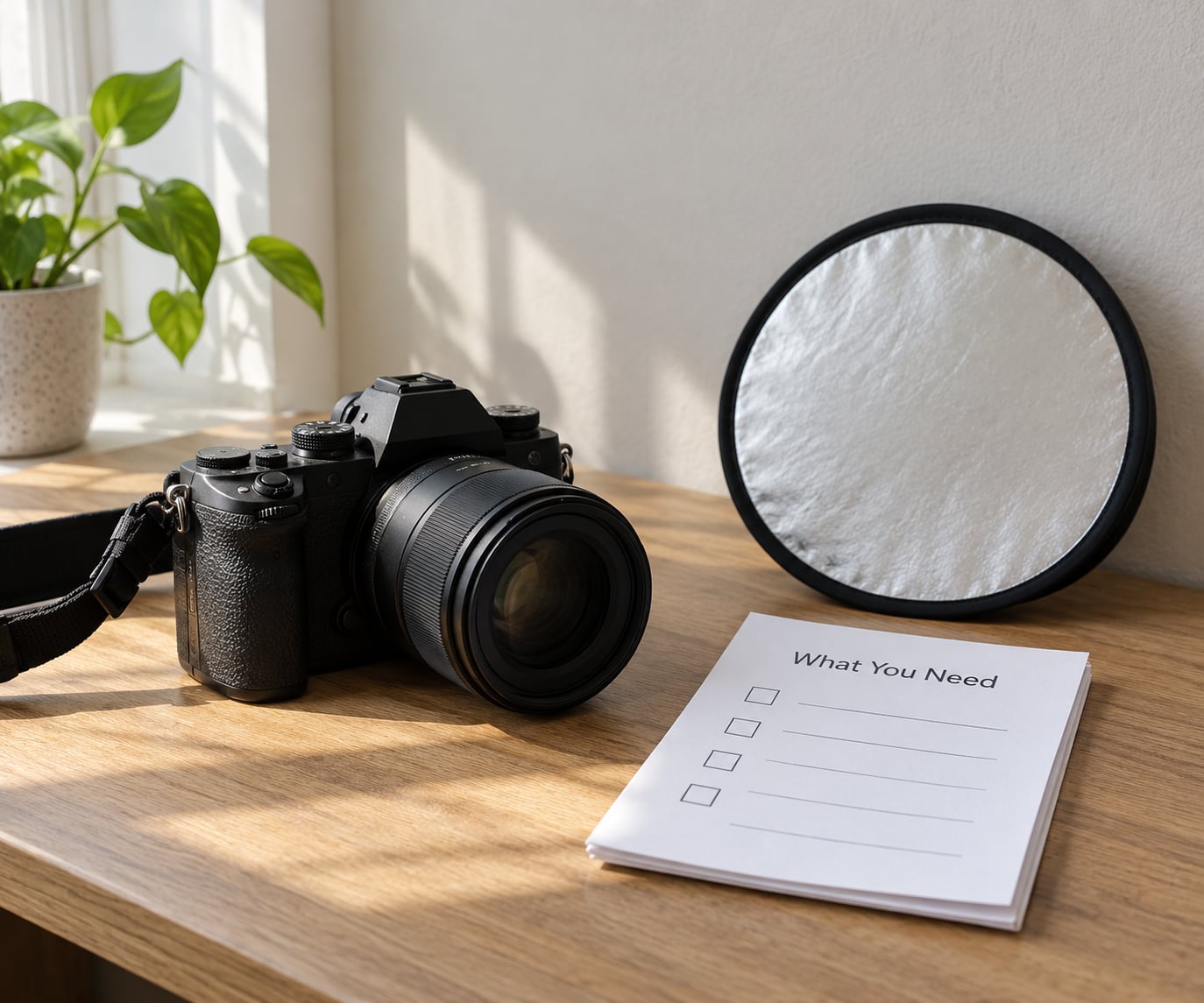
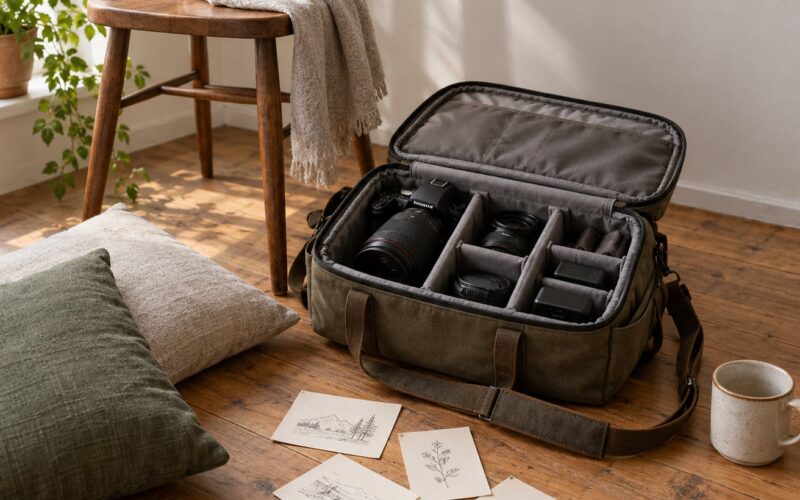
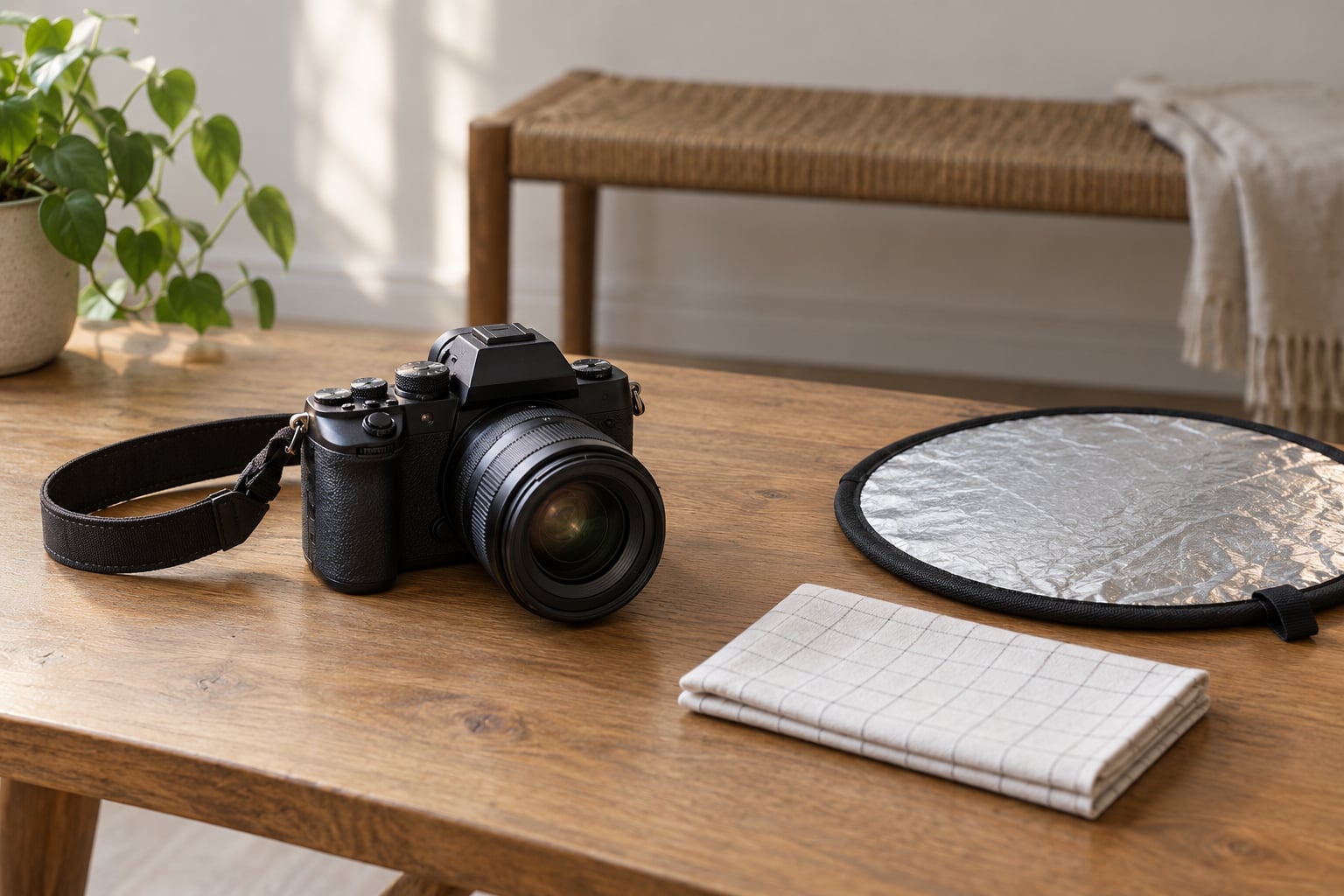
Most of the work here is done with what you already own. The gear list is short and each item earns its place by removing something uncomfortable from the session.
- A camera with reliable continuous autofocus. You will be shooting movement, and hunting focus kills a frame faster than a stiff pose does.
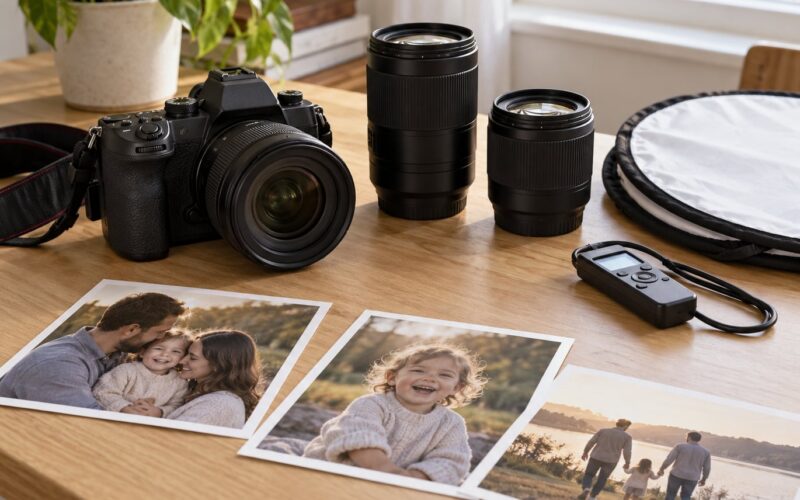
- A short telephoto, roughly 85mm on full frame. It lets you stand across the room, which means you are not hovering two feet from their faces.
- Something to sit or lean on. A bench, a wall, a railing. Couples who will not touch each other will happily share a ledge.
- Any small prop with two handles. One coffee cup, one book, one folded scarf. It becomes the object their hands share.
- A reflector or a small LED. Only to lift a face in shade. Nothing dramatic.
- A folded shot list. Ten lines, not forty. Read it out loud so they know the session has an end.
- Shoes they can walk in. Movement prompts only work if nobody is thinking about their feet.
Step-by-Step
Step 1: Learn What Comfortable Looks Like to Them
Before you unpack the camera, ask how they show closeness when nobody is watching. Some couples are verbal and stand a full metre apart. Some are tactile only at home. Some hate being photographed more than they dislike touching.
Also ask what they never want to be asked to do. Kissing, hand-holding, cheek or forehead kisses, lap-sitting. Asking is what lets the rest of the session work, because they stop bracing for the instruction they were dreading.
Step 2: Build Trust Before You Start Shooting
Explain the session shape out loud: warm-up, a few directed frames, then details. Say that most couples feel awkward for the first ten minutes and that this is normal. Most of the tension in the first quarter is the unknown, not the couple.
Give them permission to stop. “If any of this feels silly, say so and we move on” costs you nothing and buys you the whole hour.
Step 3: Photograph Adjacency Instead of Affection
Intimacy reads through proximity, shared gaze and shared activity. Once you understand that, you can photograph a couple who is not affectionate without a single touch, because touch is only one way of writing closeness in a photograph.
Setups that need no contact: walking shoulder to shoulder with matched stride; standing side by side facing the same direction with the same horizon; back to back leaning on the same wall; sitting side by side with a small gap; leaning on the same railing facing forward; one standing in a doorway while the other sits; one walking ahead and turning back; stepping forward together on the same count.
Add a shared object and the read gets warmer fast. They pass one coffee cup back and forth. They hold the ends of the same scarf and neither mentions it.
It works for couples who have never kissed and are saving it. It works for couples where modesty rules out even a lean. The frame says “these two belong together” because they are oriented the same way and focused on the same thing.
Step 4: Use Prompts That Create Interaction
Give them a task, not a position. Tasks generate expression because the face is busy with something other than being photographed.
- “Walk toward me together and stop on the same count.”
- “Both look at the same thing off to the left, then react to it.”
- “Argue about who ordered this coffee.”
- “Tell me the moment you knew. Keep going after I put the camera down.”
- “Whisper something you would never say out loud.”
- “Show me your worst dance move.”
Save the emotional ones for later in the session. The second half of a session is where reserved couples actually open up, so burn your best lines early only if you want weaker results.
Step 5: Direct Small Changes, Not Big Poses
Once a frame is close, nudge rather than rebuild. Move a shoulder back two centimetres. Ask one of them to shift their weight onto the back foot. Turn a chin five degrees toward the partner. Step forward yourself and let the couple stay exactly where they are.
You are looking for one signal at a time, and small changes are the only ones they will hold for more than a second. Keep shooting through the correction, because the frame right before the change and the one right after are often better than the one you were aiming for.
Step 6: Capture Transitions Between Moments
Genuine expressions show up on the way in and on the way out of an instruction, not during it. The half-second as someone lifts their head from a laugh, the glance exchanged while the photographer is adjusting something.
Keep the camera up during the quiet parts. When the energy dips, do not fill it with a new instruction straight away. Reserved couples often produce their most honest frame in the pause after a prompt has been dropped.
Step 7: Review Images Without Forcing a Result
Compare several frames on the back of the camera and judge them on three things: are the bodies oriented the same way, is there a shared focus, and do the faces look like people who are comfortable with each other.
Pick the frames that describe their actual relationship rather than the relationship you imagined on the board. Show them a few on screen before you leave. Saying “this one is the honest frame” out loud is often the moment a reserved couple stops feeling like a problem to be solved.
Common Mistakes
Telling them to just be natural. They already are, and that is why the frames look distant. Replace it with a specific task and a specific count.
Running a long list of generic couple poses. Forehead touch, dip, hand on the waist: every one of those can land as a request for intimacy they do not offer publicly. Bring a shorter list built from the setups above.
Giving five instructions at once. “Stand here, turn left, put your hands down, look at him, relax.” One instruction per frame, then shoot through it.
Pushing past a stated boundary. If they said no kissing, re-prompting it once, even lightly, costs the session. Move on in the same breath so the moment does not sit there.
Hovering close. Step back and use the longer lens. Distance is the single cheapest way to lower performance pressure.
Crowding the edit. A couple who arrived tense does not need proof of it in their gallery. Cut the frames where posture reads as discomfort, even when the light was lovely.
Frequently Asked Questions
How do I pose a couple who does not like touching?
Build closeness from proximity and shared focus instead of contact. Have them walk shoulder to shoulder, stand side by side facing the same direction, sit on the same bench with a small gap, lean on the same railing, or pass a single shared object between them. Ask them to look at the same thing and react to it. Keep moving slowly and shoot from a distance so the closeness reads without anyone having to touch.
What if a couple looks uncomfortable in front of the camera?
Do not add more instruction, because discomfort usually means they are performing a pose rather than living a moment. Give them a task instead: walking a route, carrying something, arguing about a coffee order. Back off with a longer lens so nobody feels watched. If they are still rigid, talk to them, take a break, and try again after the reset. Most tension resolves within the first fifteen minutes.
How can I make a non-affectionate couple look connected in photos?
Orient their bodies the same way and give their attention one shared target. Bodies facing the same direction, shoulders aligned, eyes on the same object, will read as connected even at a two-inch gap. Tight crops that hold both of them in one frame also help. Add a shared prop, such as one cup held between them, and let them pass it while you keep shooting. Never manufacture the connection with a pose they rejected.
Should I tell a couple how to stand and where to look?
Yes, but make the instructions physical and small rather than conceptual. Instead of saying stand naturally, say drop your shoulder toward me or put your weight on the back foot and look at the light. One change at a time, then shoot straight through it. Directions that name a body part get followed; directions that name an emotion get ignored. Explain why a change helps and reserved couples will hold it longer.
What is the best way to create natural interaction during a portrait session?
Give them something to do with their hands and their attention at the same time. Walking together on the same count, cooking something, reading the same page, arguing about music, showing each other something on a phone. Tasks produce movement and eye contact without anyone having to perform affection. Ask them to do the task twice, since the second attempt is usually looser than the first and worth a whole frame.
How can I photograph a couple when they are quiet or reserved?
Quiet couples usually warm up slowly, so plan for their best frames late in the session rather than early. Start with walking and wide environmental frames, skip the poses entirely for the first quarter, and introduce prompts once they have stopped bracing. Silence is useful here, so leave gaps after your instructions instead of filling them. Save the storytelling and whisper prompts for the last thirty minutes, when trust is highest.
Conclusion
To photograph a couple who are not affectionate, learn what closeness actually looks like for that pair, ask once what they never want to be asked to do, and then direct around both answers. Start with adjacency, a shared task and a long lens, keep the best prompts for the back half of the session, and edit out every frame where they looked braced. That is usually the whole technique.