Most engaged couples are not shy because they look bad in photos. They freeze because nobody has told them what to do with their hands, their shoulders and their face all at once, so they end up standing very still under a camera and waiting to be told whether they passed. The fix is simple: give them a task, not a pose.
Learning how to pose engaged couples who feel awkward comes down to giving people something to do. Ask them to walk toward you, to whisper something that makes the other person laugh, to slow down at the end of a sentence and look up. Movement occupies the hands and the attention, which is exactly where awkwardness lives.
Below is the workflow I actually run: a short warm-up conversation, one forgiving starting stance, one movement prompt at a time, and a camera angle that changes every few frames. It takes about fifteen minutes to reach the point where the couple stops thinking about themselves.
Table of Contents
- What You Need
- Step-by-Step: How to Pose Engaged Couples Without Forcing
- Common Mistakes and Quick Fixes
- Frequently Asked Questions
- What are good pose prompts for an engaged couple who does not like photos?
- Should an engaged couple look at the camera during every portrait?
- How do you make awkward hands look natural in couple portraits?
- What if an engaged couple says they are bad at posing?
- How many poses should a photographer give a couple in one session?
- Should a photographer tell couples exactly where to put their hands?
- Conclusion
What You Need
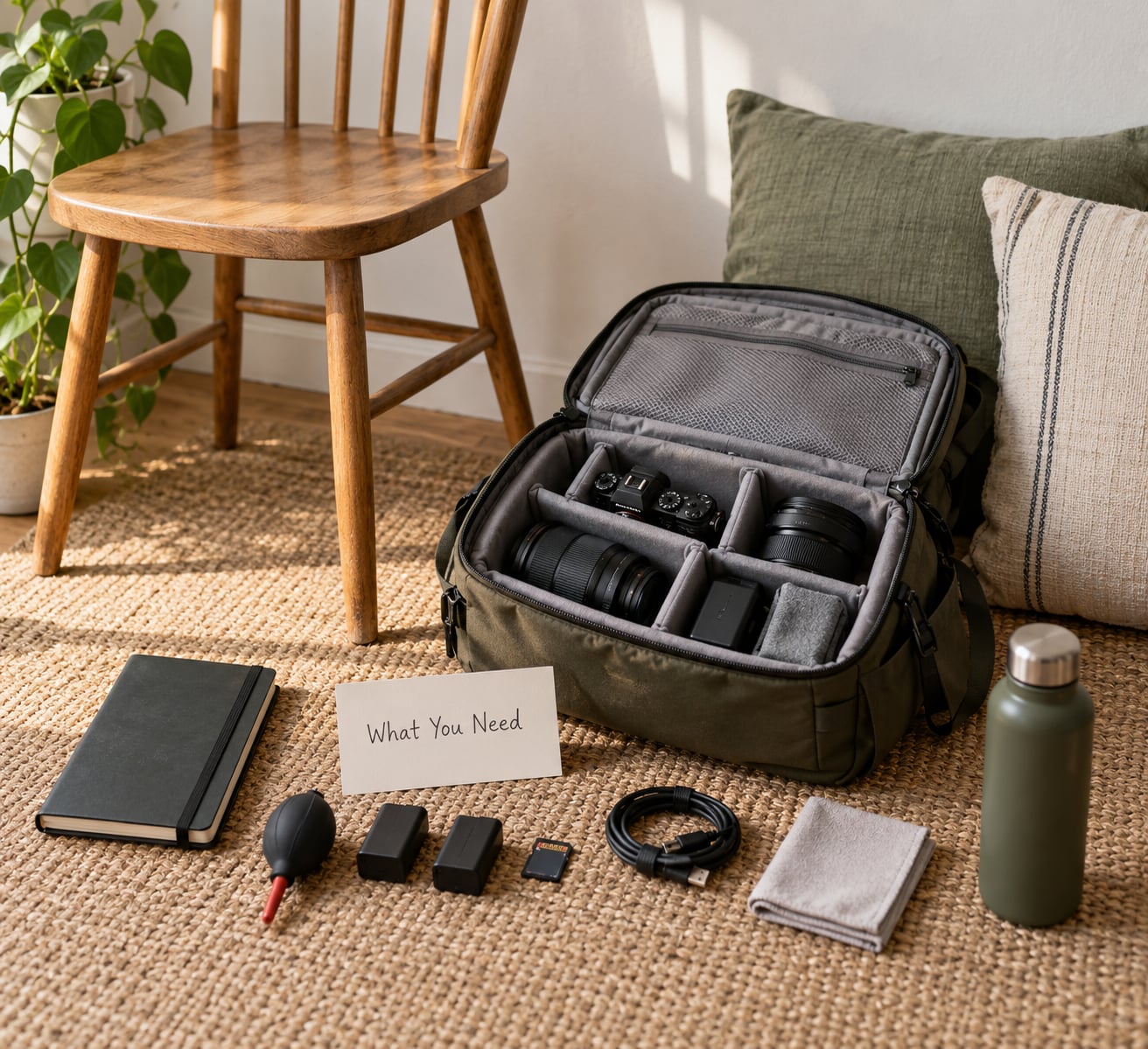
Ten minutes and a short shot list
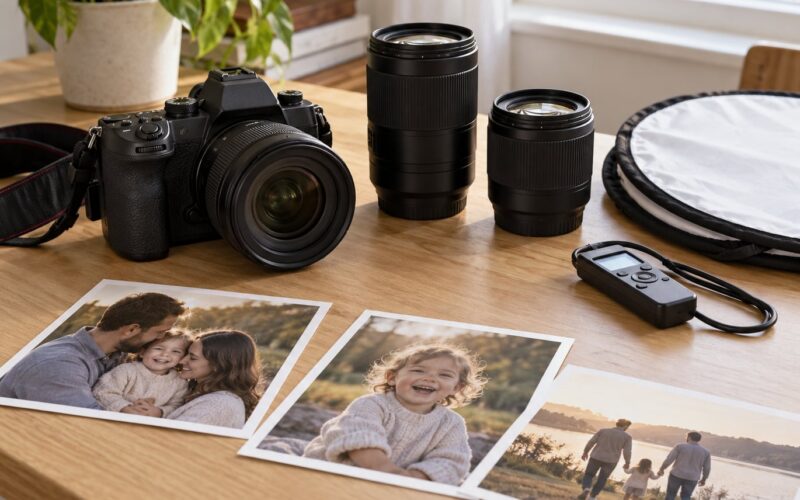
The hardest part of an engagement session is the first ten minutes. Almost every couple says they feel awkward, including the ones who end up looking the most relaxed in the final gallery. Plan the opening block as warm-up, not as a shot list, and keep the shot list in your head or in one note.
Movement ideas you can say out loud
Write three or four prompts on your phone before you arrive. Walking slowly, leaning into each other, adjusting a sleeve, turning to face the partner, holding hands and swinging slightly between you. These take ten seconds to write down and they replace every stiff position you would otherwise have to build by hand.
A location with one clear background
A plain wall, an open doorway, a stretch of fence or a quiet path gives a couple fewer things to be self-conscious about. Busy backgrounds make people shrink. If you are stuck with a messy spot, move closer and use a longer lens so the background falls away.
Distance and a longer lens
Shooting from far away with something like a 70-200mm removes the sense of being inspected. People relax when the camera is not three feet from their face, and the compression makes the frame look cleaner without any extra effort.
Styling that survives movement
Tell couples to wear outfits they can walk, sit and lean in. Shoes with a flat sole matter more than the dress or the shirt. Layers help too, because adjusting a sleeve or cuff gives the hands a job.
Breathing and short, defined sessions
Couples who know the session has an end stop bracing against it. Tell them at the start: we are shooting for thirty minutes and you will not need to hold anything for longer than a few seconds. Keeping a tight timeline is one of the cheapest fixes available.
Step-by-Step: How to Pose Engaged Couples Without Forcing
1. Put the Couple at Ease Before the Camera
Spend two minutes talking before you lift the camera. Ask what they did last weekend, who is the nervous one, whether they dislike being touched in public. Couples tell you things in the first two minutes that reshape the whole session.
Do not spring direction on them. Say what you are about to do before you do it, keep your voice conversational, and avoid jargon like three-quarter turn. You will hear a bitter review somewhere in your future that traces back to a photographer who said that.
How you will know it worked: they start making eye contact with each other instead of with you.
2. Choose a Simple Starting Position
Build the first pose from the feet up. Ask for weight on one leg, the other knee soft, the back heel barely touching the ground. Angle the bodies about 45 degrees to the lens rather than square on, and leave a few inches of space between the torsos.
Then handle the shoulders. Say drop your shoulders toward me, or push the air away with your palms. Hands get their first assignment here: one hand on a waist, one hand loosely holding an elbow, or both hands in pockets if the outfit has them.
How you will know it worked: the posture shifts between frames without anyone being told to change it.
3. Add Gentle, Continuous Movement
This is the part that fixes most awkwardness. One small action at a time, then shoot while it happens. Ask them to adjust a cuff, turn toward each other, take two slow steps, or sway once while they hold hands. Nothing takes longer than ten seconds.
Keep the movement going rather than stopping for a photograph. When you tell someone to hold still, every muscle in the body tightens at once. When you tell them to do something, the shoulders drop and the jaw unclenches on its own.
How you will know it worked: you are getting frames between the words, and those frames are usually the ones you keep.
4. Create Real Reasons for Connection
Candid-looking frames come from a couple doing something with a purpose, not from two people smiling on cue. Suggest a shared conversation about a memory, a slow walk across the frame, a quiet pause where nobody speaks, or one partner reading the back of the other’s hand.
Ask questions and wait. Tell them to talk about the first apartment, the worst holiday they have been on, the meal they are still arguing about. The laugh that arrives ten seconds late is worth more than any smile you asked for.
How you will know it worked: they stop performing and start talking to each other rather than to you.
5. Use Prompts Instead of Rigid Commands
A prompt leaves room for the couple to interpret it. A command does not. Instead of standing shoulder to shoulder, try this: stand facing each other and tell each other something you are grateful for this year.
Other prompts that work well: whisper something that will make the other person laugh, look at each other and then look away together, hold hands and walk slowly past me twice. When a prompt feels staged, cut it in half and simplify the action rather than repeating it louder.
How you will know it worked: they ask you what comes next, which means they have stopped worrying about looking wrong.
6. Vary Distance, Angle, and Composition
A couple who cannot invent new poses does not need to invent new poses. You can make six different frames from one position. Step closer for a waist-up frame, then drop low and shoot up, then move to the side and turn the couple 45 degrees, then back off for a wide shot with negative space.
Negative space does a lot of quiet work. A frame with room in front of a couple reads as composed and calm, and the couple relaxes because they are not being pushed into the middle of the picture.
How you will know it worked: you have a varied set from one stance, and nobody needed a new idea.
7. Capture the Transitions Between Poses
Shoot the corrections. The moment a partner nudges an elbow into place, the second they drop their shoulders, the half-second after a laugh, all of it photographs better than the finished pose because nobody is holding the pose for you.
Use continuous shooting and a longer lens and just watch. The couple will give you real expressions while they are arranging themselves, which is also when the guard comes down. Bursts are fine; the cost is files, not quality.
How you will know it worked: your best frame of the session is one you shot while they were waiting for your next instruction.
Common Mistakes and Quick Fixes
Giving three instructions at once
One instruction per moment. A couple holding a pose, adjusting their hands and turning their head at the same time will lock up. Give one, shoot ten frames, then move to the next.
Asking for constant eye contact with the lens
Ask for one frame with camera eye contact, then take it away. Looking at each other produces the genuine expressions you want. If they never look at the camera at all, ask them to look past your shoulder at something they both find interesting.
Making every frame symmetrical
Square, mirrored, both hands on both hips. Symmetry reads as a school portrait. Turn one body slightly, break the gap between shoulders, and let one person be a little further back than the other.
Photographing only the faces
Shoot from the chest down for a few frames. Hands, backs, waists and the space between two people tell the story of a relationship. Hold the composition lower and let the frame fill with posture rather than faces.
Showing the back of the camera too often
Self-conscious couples get worse when they inspect a small screen mid-session. It turns a shoot into a test they think they are failing. One quick check near the end of the warm-up is enough; spend the rest of the session shooting.
Over-directing with jargon
Say move closer together, tilt toward me, look at each other. If you have to explain a word twice, it is the wrong word.
Noticing the freeze too late
A frozen couple has locked shoulders and a held breath. Break the pose with a physical cue: drop your shoulders, put weight on the back foot, breathe in on the way up and out on the way down, unclench your jaw. Give them ten seconds of nothing to do, then start walking with them.
Ignoring the audience
Couples who are relaxed alone freeze in front of watching guests. If you are shooting somewhere public, move the portrait time away from the crowd or angle the couple away from it. If the crowd is unavoidable, keep the session short and finish while they are still willing.
Frequently Asked Questions
What are good pose prompts for an engaged couple who does not like photos?
Start with prompts that involve motion or a task rather than a fixed position. Ask them to walk slowly toward you, whisper something that makes the other person laugh, adjust a cuff, or tell each other something they are grateful for. Movement keeps the hands busy and the attention off the lens, which is where the awkwardness comes from. Avoid prompts that ask them to hold a shape or to perform a smile.
Should an engaged couple look at the camera during every portrait?
No. Looking at each other produces genuine expressions, so most frames should have the couple’s attention on each other rather than the lens. Ask for camera eye contact once per setup, take those frames, and then move on. If they struggle to look at the lens, try having them look just past your shoulder at something they both find interesting, which reads as eye contact in the finished frame.
How do you make awkward hands look natural in couple portraits?
Give every hand a job. One hand on a partner’s waist, hands loosely joined in front, one hand holding an elbow, or both in pockets if the outfit allows. Keep the fingers soft and separated rather than clenched, and never let arms hang straight at the sides. Hands resting on a chair back or a railing also work, and a sleeve or cuff to adjust gives them something natural to do.
What if an engaged couple says they are bad at posing?
Tell them plainly that almost every couple says this, including the ones who end up looking relaxed in the gallery. Then reassure them that they do not need to know how to pose. Your job is to give them a task; theirs is only to do it. Start with walking, which is the hardest thing to look bad doing, and build from there.
How many poses should a photographer give a couple in one session?
Give a couple maybe eight to ten distinct setups across a thirty-minute engagement session, and treat everything else as variety inside those setups by changing distance, angle and framing. More than that and the couple starts holding themselves, which is the opposite of the goal. Shorter sessions with clear movement work far better than long sessions built on a long list.
Should a photographer tell couples exactly where to put their hands?
Yes, in the first few minutes, then less and less. Exact hand direction is useful to build a starting stance that feels safe, and most camera-shy couples find that reassuring. Once the couple is moving and talking, step back and let the hands find natural work. Over-directing hands for a whole session is what makes engagement photos look staged.
Conclusion
Start with an asymmetrical relaxed stance, weight on the back foot, one clear job for the hands. Then give one movement prompt and let them talk to each other for a moment before you say anything else.
That is usually the frame that ends up framed above a sofa. Couples who spend fifteen minutes being given tasks stop worrying about how they look long before you finish the session, and the poses you would have planned take care of themselves in 2026 and every year after.