Cold is the number one reason a camera battery quits early in winter, and the fix is mostly preparation rather than gear. To extend camera battery life in the cold, keep spares at body temperature, trim the features that draw the most power, and never charge a battery that has been sitting in freezing air.
A lithium-ion pack that runs all day at 20C can be flat in two hours near freezing, and action cameras are usually the first to suffer. Here is the short version before the detail.
- Carry two or three spares in an inside pocket, not the camera bag.
- Charge every battery indoors, fully, the night before.
- Swap batteries at around 25 percent instead of running one flat.
- Seal the camera in a zip bag before you bring it indoors.
- Drop Wi-Fi, GPS, Bluetooth, preview and long-exposure noise reduction.
- Lower screen brightness and shorten the auto power-off timer.
- Never charge a cold battery; let it reach room temperature first.
- Count on roughly half your usual battery life below freezing and plan for it.
How much capacity you can actually count on depends almost entirely on ambient temperature. These figures are typical, not a spec sheet, and they are the reason a shoot that needs three batteries in October can need six in January.
| Ambient temperature | Usable share of rated capacity | What it looks like in the field |
|---|---|---|
| Around 20C (68F) | Close to 100 percent | Rated runtime applies, roughly as the manual states it |
| Around 10C (50F) | 85 to 90 percent | Most shooters notice nothing until the last hour |
| Around 0C (32F) | 65 to 75 percent | Battery gauge reads low early, warnings appear sooner |
| Around minus 10C (14F) | 45 to 60 percent | Runtime halves, voltage sags during continuous bursts |
| Around minus 20C (minus 4F) | 30 to 45 percent | Batteries may refuse to charge at all until warmed |
Table of Contents
- What You Need
- Step-by-Step: How to Extend Camera Battery Life in the Cold
- Common Mistakes
- Frequently Asked Questions
- How cold is too cold for a camera outside?
- How do you keep camera batteries warm in cold weather?
- Can you charge a camera battery when it is cold?
- Why does my camera battery drain so fast in freezing temperatures?
- What is the best way to store camera batteries to maximize their life?
- How many camera batteries should I bring for a winter shoot?
- Final Checklist
What You Need
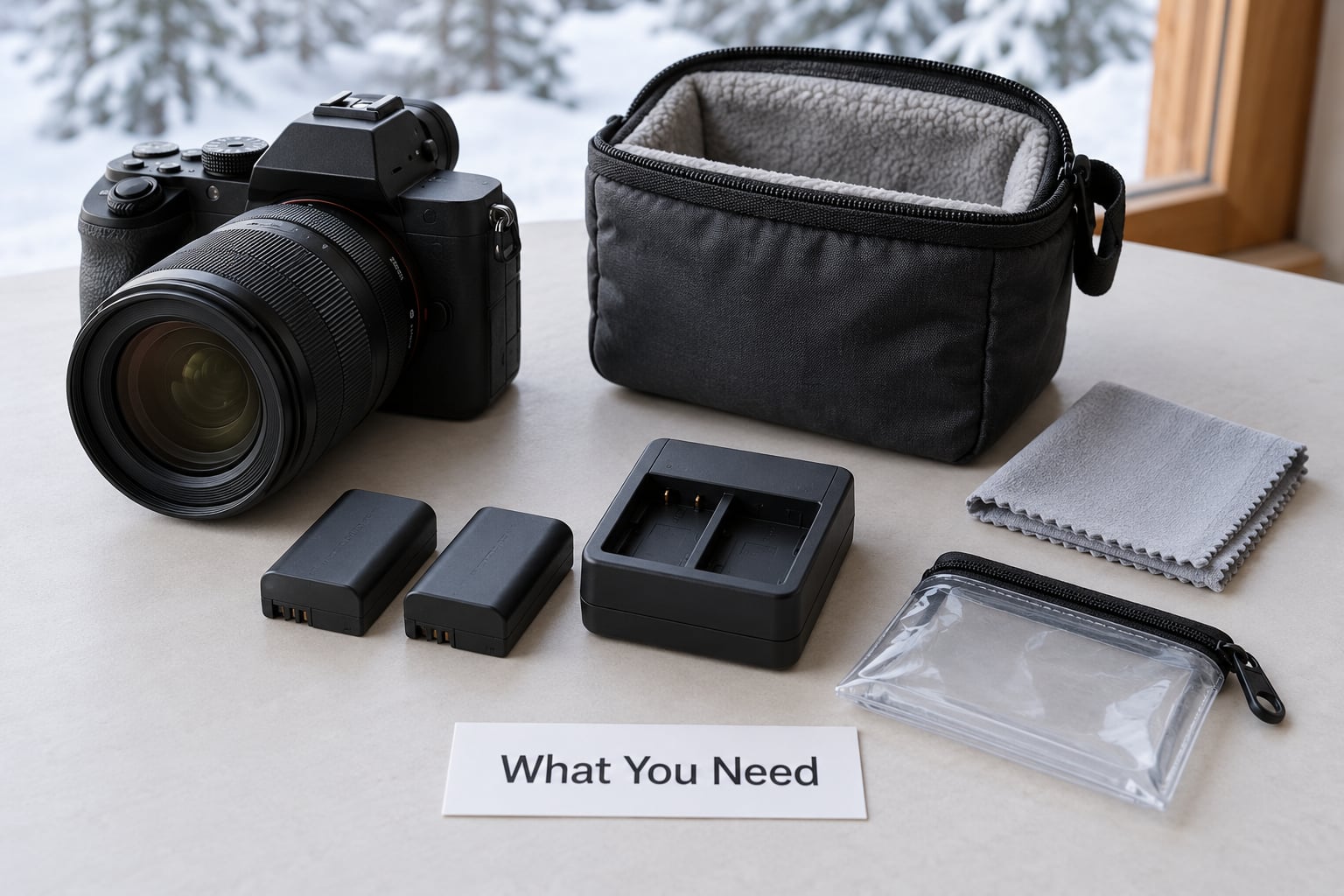
Everything below is cheap and fits in one jacket pocket. You are building a kit that keeps batteries at body temperature, gives you a way to charge without a wall socket, and protects the camera when warm humid air meets frozen gear.
- Two or three spare batteries in the chemistry your camera uses, plus the one in the body. Buy the same cells you already own rather than mixing packs from different batches, which is where third-party trouble tends to start.
- A charger you can run from a car or a USB power bank, not just a wall plug. A power bank that has been sitting in a pack also works better if you keep it in an inside pocket.
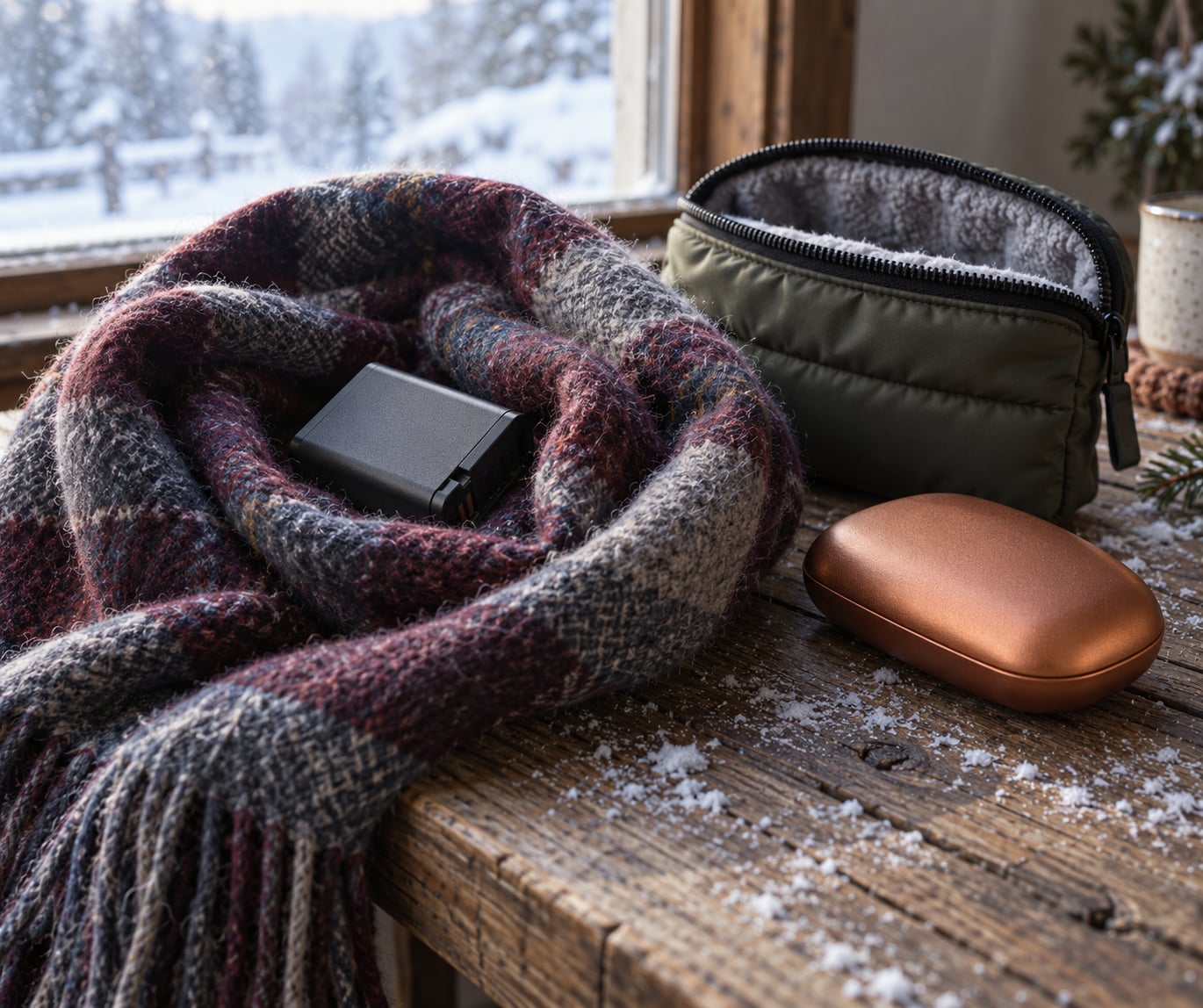
- An insulated pouch or a small zip bag with fleece lining for the spares that are not in your pocket.
- Hand warmers, the cheap chemical kind. One in the battery pouch is enough, and a second one in the camera bag keeps the whole kit closer to room temperature.
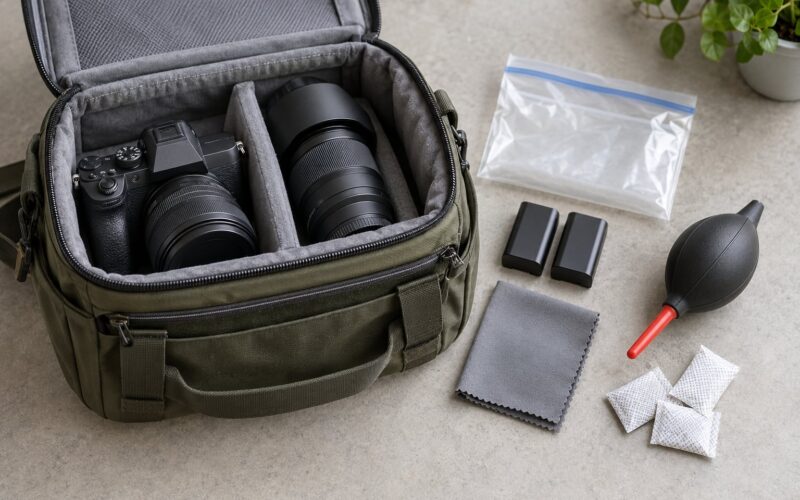
- A microfibre cloth and a small towel for blowing snow and meltwater off a body before it goes in the bag.
- A marker or tape for labelling batteries A, B, C so you know which one is already warm.
That is the whole kit. Skip the hand warmers and the labelled spares and the routine below still works, just with more swapping.
Step-by-Step: How to Extend Camera Battery Life in the Cold
Prepare Batteries Before Leaving
Charge everything indoors the night before and let the cells settle at room temperature. A battery that comes off the charger at 40C and goes straight into a freezing car is being asked to do two hard things at once, and its first few shots will be the worst ones of the day.
Then rotate rather than store. Keep the two or three packs in constant circulation, use the oldest one first, and never leave three fully charged cells sitting in a drawer for six months. Partial charge over long storage ages a pack more gently than a full one, so if you are packing for a trip next week, charge to full the night before, and if you are storing until spring, charge to roughly 60 percent and keep them cool.
Keep Spare Batteries Close to Your Body
This is the single biggest win and it costs nothing. An inside coat pocket sits at skin temperature, so a spare riding there loses very little capacity while the same pack in an unlined camera bag at minus 10C is already sagging before you lift the camera.
Carry one spare in the chest pocket and one in a trouser pocket, both on the body side of the fabric. Use a thin insulated pouch if you are moving between pockets a lot, and keep a hand warmer in that pouch for the stretches when you are stationary. Do not put batteries in a back pocket while you are hiking hard, because a pack that gets pressed against your body and sweats is a pack you may pull out damp.
Limit Cold Exposure Between Shots
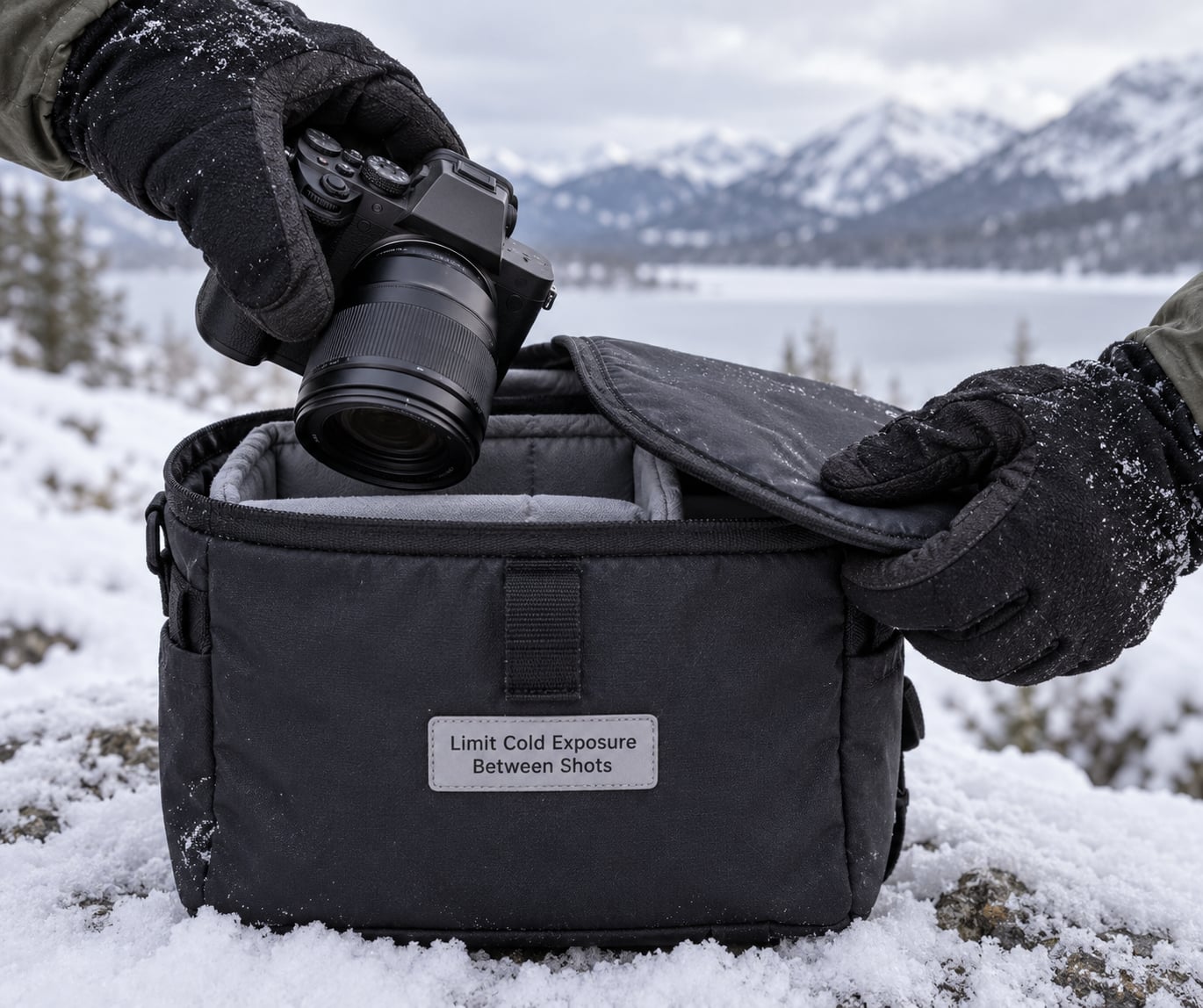
Between bursts, the camera does not need to sit in the open. At minus 15C a body left on a rail for ten minutes can lose more charge than a body that spent the same ten minutes in a closed bag warmed by a hand warmer, and you lose the condensation problem at the same time.
Make a habit of zipping the camera into its bag or under your jacket between setups, and clear falling snow off the top plate before you power down. When you take it out again, give it a few minutes sealed if it came from somewhere warm, rather than starting a cold body on a cold battery.
Reduce Power-Hungry Camera Features
Some features cost more than others, and the order you turn them off matters. Work down this list and stop when your runtime is good enough for the shoot.
- Wireless connections. Wi-Fi, Bluetooth and GPS are often left on by default and search for networks constantly. Turn them off completely rather than leaving them on idle.
- Long-exposure and high-ISO noise reduction. These run the sensor for a dark frame after every shot and can double the power draw on some bodies.
- Image stabilisation when you are on a tripod or shooting a static scene. The gyro assembly is a constant motor load.
- Continuous shooting and high burst rates. The shutter, mirror and buffer all wake up for every frame, and cold cells sag fastest under this kind of load.
- Highest image quality and raw plus JPEG together. Less writing, fewer buffer stalls, lower average draw.
- Screen brightness, the rear display and any top-panel screen. Dim the backlight and turn the second screen off.
- Auto power off timer and playback screen. A shorter idle timeout means the camera sleeps sooner when you are waiting for a lift to the summit.
None of this ruins image quality, except stabilisation, which matters when you are handholding at slow shutter speeds. Know which one you are giving up.
Use Batteries in a Smart Rotation
Do not wait for the red light. Swap at around 25 percent, because a cold cell’s voltage already sags under load, so the last quarter of the gauge is where a weak pack falls over most often. Carrying two packs that overlap at 25 percent means one warm pack is always available.
Never run a pack flat if you can avoid it, for two reasons. Deep discharge in the cold is the hardest thing you can ask a lithium-ion cell, and the community habit of never exhausting a pack also stretches total lifespan. A pack swapped at 25 percent usually comes back to around 60 percent after the camera’s own drain, so treat a swapped-out cell as partly used rather than spent.
A battery grip helps here in a way that is more real than most people expect. The battery well sits where your hand wraps around it, and that hand heat keeps the pack and its contacts warmer than the same pack hanging in a strap. The benefit is modest rather than dramatic, and it doubles as a second battery, so it is worth packing if your body already has one.
Protect the Camera From Moisture and Condensation
Cold air holds almost no moisture. Bring frozen gear into a warm room and that moisture condenses on and inside the body, on the lens elements and on the sensor glass, which is where winter gear gets ruined. Batteries are part of this routine, because warm cells going into a cold pocket or a cold charger is the same kind of thermal shock.
The protocol is simple and works every time. Seal the camera in a zip bag or a padded case outdoors, with the bag squeezed to push most of the air out, then bring it inside and leave it closed for around two hours before opening it. The camera warms gradually and the trapped air warms with it, so nothing condenses. If you have to put on a coat before going out, wait at least the same length of time before you go out.
Skip a bag and you can get water on the sensor or inside a lens barrel within twenty minutes, and a camera that has been sitting in a warm car with the windows up is the same problem in reverse.
Recharge and Recover Batteries Safely
The rule people break most often is charging in the cold. A lithium-ion cell should not be charged below 0C, because charging forces ions to move through a sluggish electrolyte and can plate lithium inside the cell, which permanently reduces capacity. Let the battery sit indoors until it reaches room temperature, then charge it.
So if a pack dies in the field and reads as flat, do not put it straight on the power bank in the car. Put it in an inside pocket for fifteen to twenty minutes, then try it again. Batteries that look dead after cold exposure usually come back once they are warm, and plenty of shooters rely on this to rescue a pack at the end of a shoot.
For longer storage between shoots, keep cells part-charged and cool, remove them from the body, and skip the 40 to 80 rule debate: it is a phone habit and camera packs are not run down daily, so partial charging still wins over letting a cell sit at full charge for months.
Common Mistakes
Charging a battery in a cold car. The charger will often refuse, and if it does not, you are charging a cell below its safe limit. Correction: charge indoors at room temperature, or warm the pack in a pocket first.
Leaving spares in the camera bag. The bag is the coldest place on your body. Correction: pocket the spares and keep a hand warmer with them.
Trusting the on-screen percentage in the cold. The gauge tracks charge, not available capacity, so a pack can read half full and drop to nothing in seconds of burst shooting. Correction: judge runtime by your own field notes, not by the number on the back screen.
Running one battery all the way down. Deep cold discharge is the fastest way to lose a cell for good. Correction: swap at 25 percent and keep the pack circulating.
Bringing the camera straight inside. Condensation forms on frozen gear, and it forms fastest on cold metal and glass. Correction: seal it in a bag and wait about two hours.
Mixing cell types and random third-party packs. Budget and off-brand cells are the ones that report high percentages and then collapse at minus 10C. Correction: stick to one brand and batch, and carry a known pack as a backup.
Warming a battery with a direct heat source. A hot pack pressed against a cell can damage it, and a lithium-ion pack that is punctured or overheated is a fire risk. Correction: body warmth and gentle room-temperature warming only.
Frequently Asked Questions
How cold is too cold for a camera outside?
Most interchangeable camera bodies are rated to work from about 0C to 40C, so freezing air sits below the official range even though the camera often keeps working. Action cameras go lower, with recent GoPro models quoting roughly minus 10C. Below minus 10C expect reduced battery capacity, a stiff shutter and possible screen lag. Below minus 20C, treat the body as warm kit that happens to have a viewfinder.
How do you keep camera batteries warm in cold weather?
Keep spares in an inside pocket against your body, where they stay near skin temperature, and carry a chemical hand warmer in an insulated pouch for the times you are standing still. Skip the camera bag, which is the coldest spot in your kit. Swap packs at around 25 percent so a warm spare is always available, and expect a pocket-warm cell to hold far more of its rated capacity than one that has sat on frozen ground.
Can you charge a camera battery when it is cold?
Not below 0C. Charging a cold lithium-ion cell forces ions to move through sluggish electrolyte and can plate lithium inside the cell, which permanently cuts capacity. If a pack reads as dead in the field, warm it in an inside pocket for fifteen to twenty minutes and test it again before charging. A power bank that is itself cold delivers less current too, so keep it against your body as well.
Why does my camera battery drain so fast in freezing temperatures?
Cold lithium-ion cells have higher internal resistance and slower ion mobility, so voltage sags faster the moment the camera draws current. The charge is not disappearing, it is simply not deliverable, and it often returns once the cell warms. In practice you can lose 30 to 50 percent of rated capacity around 0C, and more below minus 10C. That is why the fix is warmth, rotation and fewer features, not a different charger.
What is the best way to store camera batteries to maximize their life?
Store cells cool, dry and part charged, with roughly 40 to 60 percent charge for anything kept more than a few weeks, and take them out of the camera body. Avoid a hot car or a damp bag, and check them every couple of months. Rotate two or three packs rather than leaving one sitting unused, and let stored cells reach room temperature before you charge them. Full charge right up to the trip is what you want, not what storage wants.
How many camera batteries should I bring for a winter shoot?
Count from expected runtime at the forecast temperature, not at room temperature. Below freezing, halve the rated figure, then round up: a six-hour ski shoot that normally takes two packs can take four, and an all-day outing deserves three spares plus the one in the body. The widely used field habit of swapping at 25 percent makes overlapping packs useful, since a swapped cell returns around 60 percent rather than empty.
Final Checklist
If you do one thing before the next cold shoot, charge every battery indoors tonight and move half of them into a jacket pocket, where they will spend the day instead of the coldest bag you own.
Then, before you leave the house:
- Two or three spares charged, full and at room temperature
- Spares in an inside pocket, labelled A, B, C
- Insulated pouch with a hand warmer, and a power bank kept warm too
- Zip bag or padded case ready for the return trip inside
- Wireless off, stabilisation off if you are on a tripod, screen dimmed
- Runtime doubled or better against the forecast temperature
When the gauge drops below a quarter, swap rather than push. A warm spare beats a warning light every time, and the pack you swap out usually comes back to life inside your coat.