To insure camera gear you follow one path: name every item, decide what it would cost to replace it today, then buy the policy that matches how and where you shoot. Most of the work sits in the paperwork, not the purchase. Insurers settle on replacement cost when you can prove what an item cost and what it costs now.
There are really three routes. You can add a scheduled rider to an existing homeowners or renters policy, buy cover through a professional association such as PPA, or go direct with a standalone inland marine or small business equipment policy. The right one depends on whether you are shooting for pleasure or for money, and on what your home policy already excludes.
Here is the process I would follow, in the order that produces the fewest surprises later.
What You Need
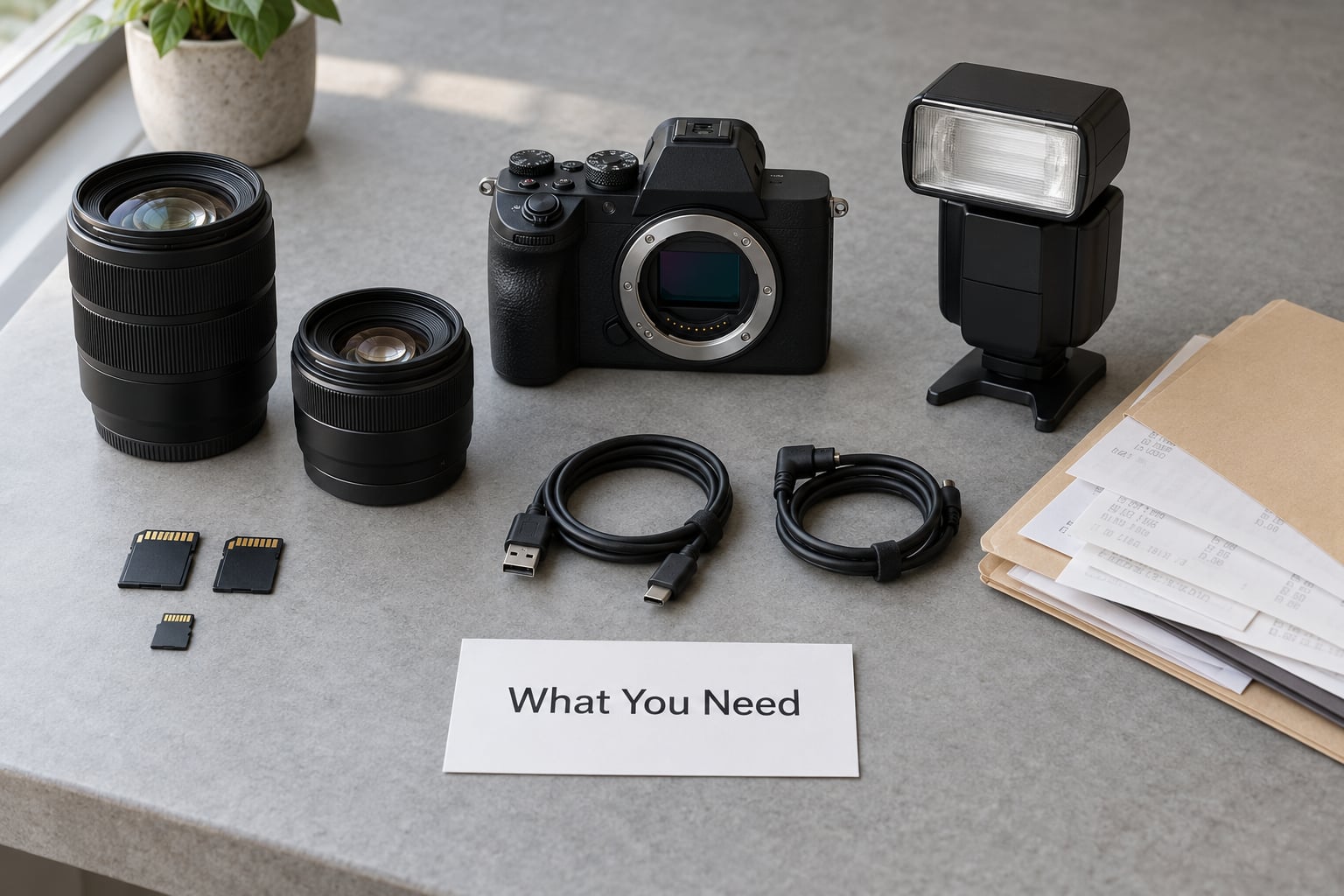
Gather this before you compare anything. Insurers underwrite from declarations, so anything missing from your paperwork becomes a negotiation after a loss rather than a line on a schedule.
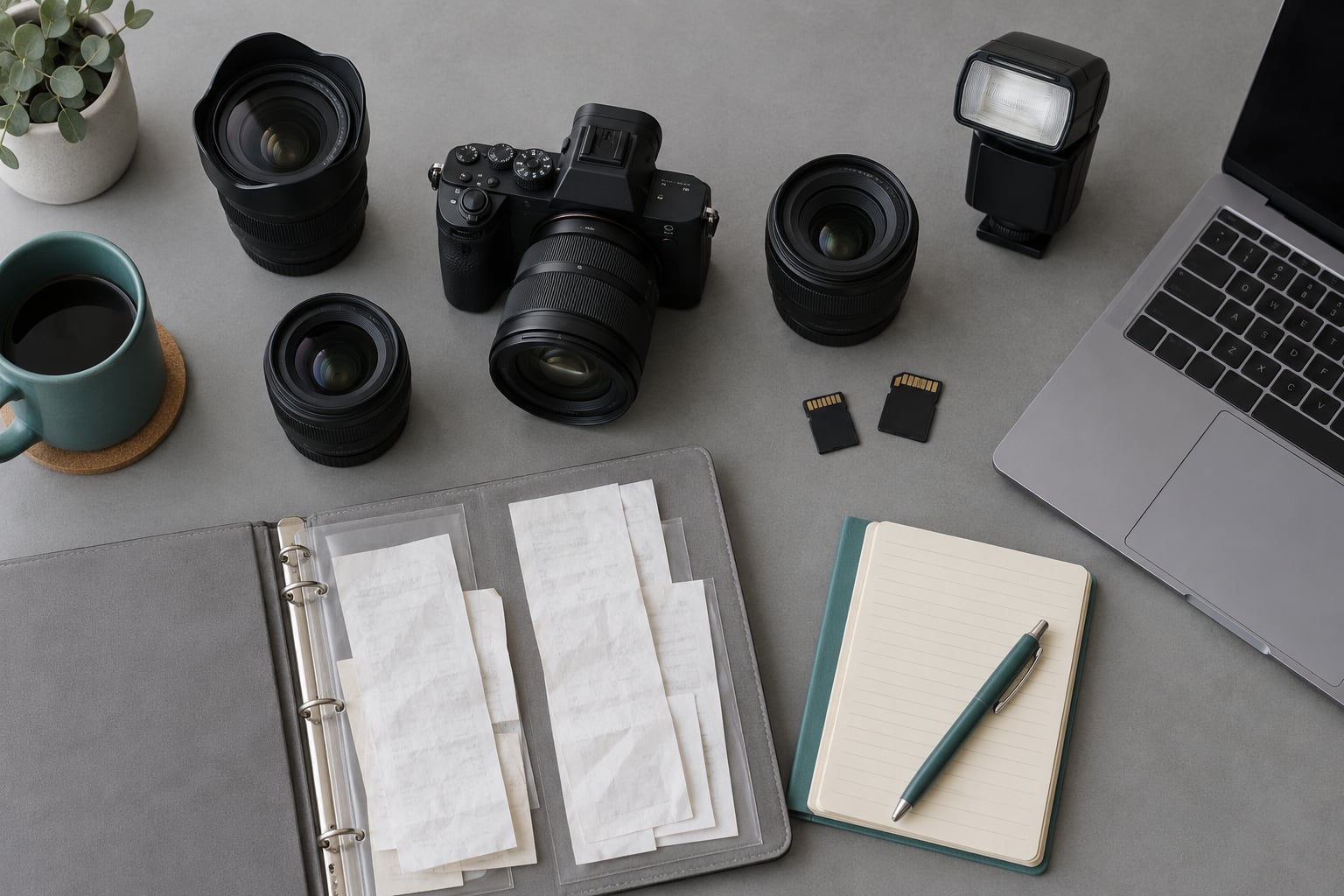
- Every receipt and invoice you still have, including the original box paperwork. Digital copies in your email archive count for most insurers as long as the merchant name, date and amount are legible.
- Make, model and serial number for each item. Serial numbers live on the base plate of most bodies, engraved on lenses near the mount, and on the underside of flashes and triggers.
- Current replacement prices. Check what the same body or lens sells for new right now, not what you paid years ago.
- Your existing home or renters declarations page. The limits page shows your personal-property cap and the per-item high-value sublimit.
- A rough sense of your shooting. Frequency, locations, whether you work for hire, whether you travel overseas, and whether other people handle your gear.
- Current condition notes for used or traded items. Cosmetic wear matters on lenses; a scratch does not, a haze or fungus does.
- Your insurer’s eligibility rules. Several specialist policies require a business identity, registered income or a business address, which is the main reason hobbyists get turned away.
Photographers on r/photography repeatedly run into the same wall here: the well-known specialist policies ask for business identity or income, and a hobbyist has neither. Knowing that before you start saves an afternoon of forms.
Step-by-Step: How to Insure Camera Gear
Create a Complete Equipment Inventory
Open a spreadsheet. One row per item, no grouping, no writing “lenses” and moving on. Each row needs make, model, serial number, purchase date, where the receipt is stored, condition, and the current replacement price.
Include the accessories people forget: bodies, lenses, flash and triggers, light stands and modifiers, audio recorders, monitors, gimbals, drones, dive housings, laptops that hold client files, and memory cards. A lens alone can account for more value than several bodies combined, so it deserves its own row.
Save two copies in different places. A local file plus a cloud copy in a folder you will still find in three years. If the laptop holding the only copy is in the bag that got stolen, the inventory dies with it.
Determine the Value You Need Insured
Add up the current replacement cost of the whole inventory. That total is your number, and it is the number the rest of the process is built around.
Insurers settle on one of two bases. Replacement cost pays what a new equivalent item costs today, which is what you want. Actual cash value subtracts depreciation first, so a four-year-old body gets a fraction of what it costs new. Paying for replacement cost coverage costs more premium, but it is the only version that survives a price rise on the flagship body you shoot with.
Do not inflate the total. Insurers check claimed values against current retail pricing and past sales of the same model, and a schedule that reads like a wish list invites extra questions before a claim is settled. Value the kit at what it would genuinely cost to replace today, item by item.
Compare Coverage Types and Exclusions
Three coverage families matter to photographers, and they fail in different ways.
- Homeowners or renters personal property. The cheapest option, and the one most photographers start with. The problem sits in the fine print: per-item caps for unscheduled high-value property, a reduced percentage payout for loss away from the insured premises, and no cover once gear becomes a business asset. One photographer on r/photography describes a carrier that capped cover at a couple of thousand per item and paid a fraction of that when damage happened outside the house.
- Travel insurance with a gear endorsement. Useful for a specific trip, especially where your home policy stops. The limits are usually modest and the wording often excludes professional work, which rules it out if the trip is a paid commission.
- Standalone equipment and inland marine cover. Written for gear wherever it goes. Higher limits, lower per-item restrictions, optional worldwide territory, and usually a newly acquired equipment window so a body bought mid-term is covered for a set number of days without a paperwork change.
Then read the exclusions, which matter more than the headline features. Look for named perils versus all-risks wording, earthquake and flood inclusion, off-premises reductions, distance limits from home, and whether the policy covers gear while it is in a vehicle. One hobbyist reported an agent willing to cover gear only within a hundred miles of home and only in North America.
Choose the Policy Structure
How the gear gets listed decides how claims behave.
- Scheduled personal property. Every item named individually with a stated value. Slower to set up, but an item on the schedule is an item the insurer knows about, which removes most of the argument at claim stage.
- Blanket or category cover. One limit for all photographic equipment. Faster and cheaper for a hobbyist with a handful of items, but per-item sublimits often sit below what a single flagship body costs.
- Occasional or full commercial classification. Required once you are paid for photographs. Personal-property policies generally exclude business equipment, so this is the route that actually applies to working shooters.
If you are unsure how to insure camera gear you use for paid work, the trigger is uncomfortable but clear: the first time a photograph earns money, the gear stops looking like personal property to most home policies. That single change is why people shoot weddings on their homeowners cover and later find the claim rejected.
Understand Deductibles, Limits, and Claims
The deductible is the amount you keep if you claim. A low deductible costs more each year; a high one costs less and stays out of the way until you actually have a loss. Pick the figure you could pay without hesitation on the day you file.
Then check the ceiling. Limits are usually expressed as a single amount for all equipment, with a per-item cap underneath it. If the per-item cap sits below the value of your most expensive lens, the schedule is decorative.
Look at the reporting deadline as well. Policies generally want to know about a loss within a short window, often days rather than weeks, and late notification is a common reason for trouble. Note the claims line and put it somewhere you will find it before you need it.
For the claim itself, expect to supply a police report for theft, dated photographs of the damage, the serial numbers, and the receipts or appraisals. Keep a claim log with dates, names and reference numbers. Adjusters ask for the same three or four things every time, and having them in one folder is the difference between a settled claim and a stalled one.
Buy the Policy and Save the Evidence
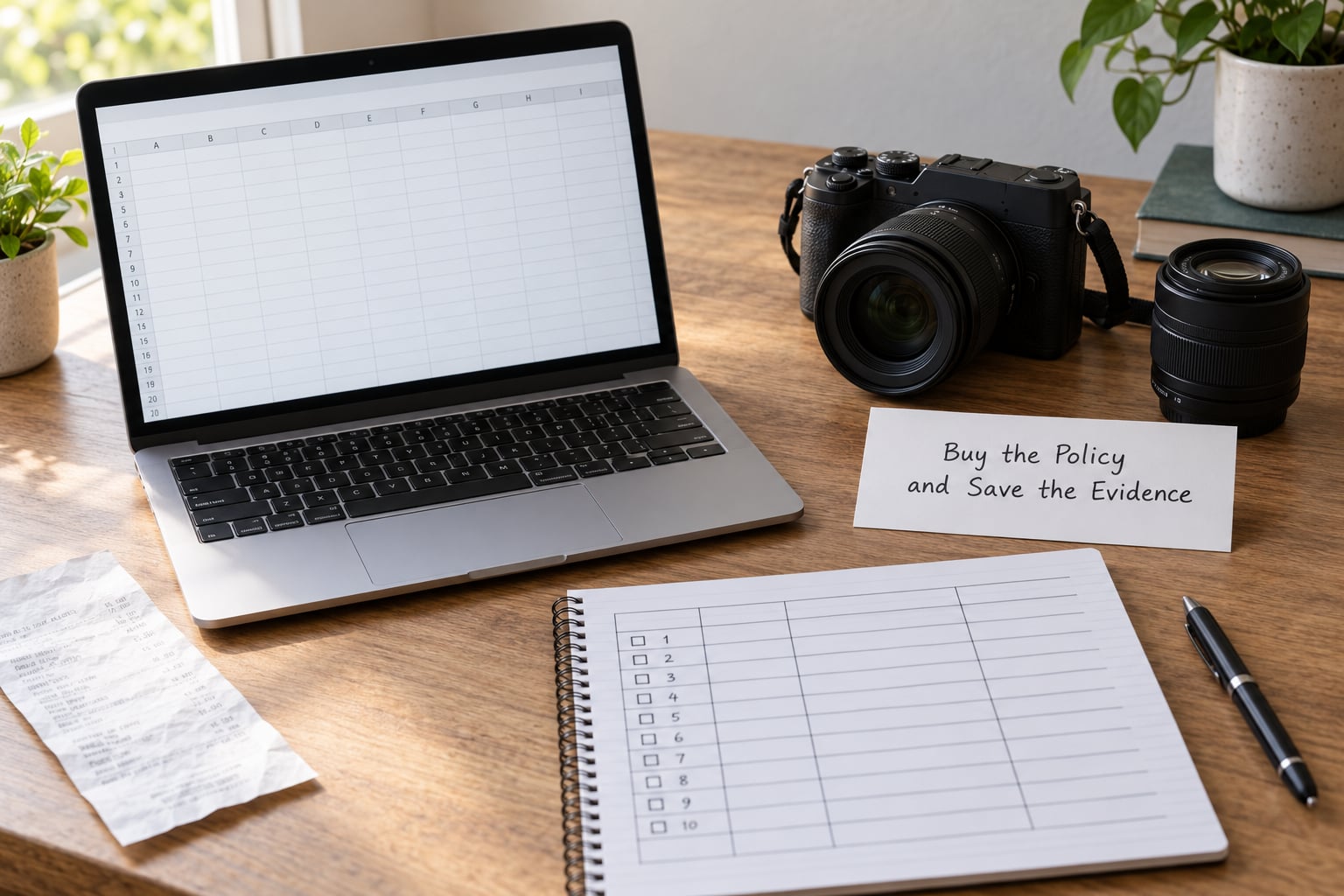
Get the quote in writing and read the certificate before the policy renews, not after. Confirm four things: the total insured value matches your inventory, the deductible you chose appears on the declarations page, the territory includes everywhere you shoot, and the newly acquired equipment window is long enough for how you buy gear.
Save the policy number, the declarations page and the full schedule. Keep them in the same cloud folder as your inventory, plus an offline copy on your phone. If a claim lands while you are travelling on a shoot, you will be doing this from an airport with patchy signal.
Photographers in photography Facebook groups who report a clean experience tend to share one habit: they keep a dated, serial-numbered gear list and a matching set of receipts. It takes an evening a year and it is the part of the job nobody regrets.
Review and Update Coverage Periodically
Review the schedule when something changes rather than on renewal day. Buying a new body, selling a lens, moving to a new state, starting to travel more, taking on paid production work, or carrying someone else’s gear are all reasons to revisit the declarations.
Depreciation runs the other way too. Gear that has dropped in value does not need to stay at the same insured figure, and trimming the schedule is the easiest way to bring the premium down without losing cover.
Set a calendar reminder each year. Ten minutes comparing your current inventory against the schedule catches most of the drift.
Common Mistakes
Undervaluing the gear
Insuring for what you paid three years ago under-compensates you, and rounding down feels safe until the claim pays out at depreciated value on a body that has since gone up in price. Use current replacement pricing and correct the schedule.
Not keeping receipts
Without proof, insurers fall back on lower settlement methods or decline the item. Photograph every receipt the day you get it and store the images with your inventory file, not buried in a chat thread three years later.
Assuming the body policy covers the accessories
A body is rarely the expensive part. List flash, triggers, audio, lighting, gimbals, monitors and drones individually so nothing falls through a per-item gap.
Overlooking geographic limits
Off-premises reductions and distance caps quietly gut a claim. One photographer on r/photography was told a farm bureau agent would only cover gear within a hundred miles of home and only in North America. Confirm territory in writing for every country you plan to shoot in.
Choosing a deductible you cannot absorb
A high deductible saves a modest amount each year and is a real obstacle on a bad week. Take the lower deductible if the higher one would force you to repair or replace a body yourself.
Missing the claim deadline
Notification windows are short and they start at the moment you discover the loss. Put the claims number in your phone and tell your insurer the same day.
Filing on a scheduled rider and losing your home premium
A rider can be genuinely counterproductive: a claim against it can push the whole homeowners renewal up. Ask your home insurer what a claim would do before you use it for a small loss.
Waiting until after you have been paid to switch
Personal-property cover and commercial equipment are different classifications, and the crossover happens without warning. Move to commercial classification as soon as income begins, not after the first rejection.
Frequently Asked Questions
How much does camera gear insurance cost?
Expect roughly 1% to 4% of the total insured value per year, with the wide range driven by territory, deductible and whether new gear is included. Photographers on r/photography report paying about 1% of retail value annually when they list every item by serial number, while others have been quoted above that once association membership and worldwide cover are added.
Does homeowners insurance cover camera gear?
Usually, but not fully. Personal property is covered up to your policy limit, yet most policies cap unscheduled high-value items and reduce the payout for loss away from the insured premises. A photographer writing on r/photography described cover that stopped at a small per-item cap, which is far below a typical body-and-lens kit. Read the declarations page before assuming.
Can I insure camera gear without a business?
Yes, with limits on which policy will accept you. Homeowners and renters riders are open to hobbyists, and some association policies and mainstream providers cover personal photographic equipment. The specialist policies aimed at working photographers often require a business identity or registered income, which is why hobbyists report being turned away. Sort out that eligibility question before you build a quote around a provider.
How do I insure used gear without receipts?
List it anyway, with an independent appraisal and dated photographs of the condition and serial numbers. Some insurers accept appraisal-based proof of value, others will only cover a portion or ask you to accept depreciated settlement. Be upfront about the missing invoices at quoting stage, because a gap discovered during a claim is far worse than a gap disclosed during underwriting.
Does camera insurance apply while I am travelling?
Only if the policy territory says so. Home personal property often carries an off-premises reduction or a distance limit, and travel endorsements frequently exclude professional work. Worldwide equipment cover, sometimes an optional add-on, is built for this. Carry the gear in hand luggage where you can, keep receipts with you, and never leave it visible in a parked vehicle, however briefly.
Do I need liability or errors and omissions cover as a photographer?
Equipment cover and liability cover answer different questions. Equipment cover pays for your camera and lenses. General liability pays when someone else is injured or their property is damaged around your shoot, and errors and omissions pays when you deliver the wrong thing or lose a client file. Once you take paid commissions or work on other people’s premises, liability is usually the more urgent gap.
Conclusion
Start with the boring part. Build a dated, serial-numbered inventory of everything you shoot with, add up what each item costs to replace today, and compare that total against what your homeowners declarations page actually provide. That is how to insure camera gear properly: paperwork first, then policy.
Only then choose between a scheduled rider, an association policy and standalone equipment cover, and match it to whether you shoot for pleasure or for money. The paperwork you build this month is what decides what you are paid after a loss.