To shoot beach portraits without squinting, keep the sun off the subject’s face. Work the edge of open shade, or hold the light about 45 degrees off the camera axis, then add fill from a reflector or a low-power flash so the eye sockets stay open. Five fixes cover nearly every beach session.
- Turn the body toward the sun and the face back toward the camera.
- Shoot in open shade, or under an umbrella, hat brim, towel or building shadow.
- Put a reflector, white shirt or pale sand bounce under the face to lift the shadows.
- Use fill flash at low power, bounced or diffused, as a last step before noon light.
- Wait for a cloud, or come back at golden hour, when the light softens on its own.
The reason it works is physical, not stylistic. Your brow ridge is shaped to shade the eye from light above, so a face pointed straight at the sun forces the upper lid to clamp down. Take the sun off-axis and the lid has no reason to close.
What You Need
Start with the camera you already own. A dedicated body buys you nothing here that shade and position don’t give you free, and every one of these steps works on a phone.
- A camera with aperture priority. Shoot RAW so blown sand and sky still hold recovery room later.
- A normal to short telephoto lens, roughly 50-85mm equivalent. Long glass lets you stand back and keep the fill board out of the subject’s eyeline.
- Something to make shade. A beach umbrella, a towel, a hat with a wide brim, or a wall, cabana or dune shadow.
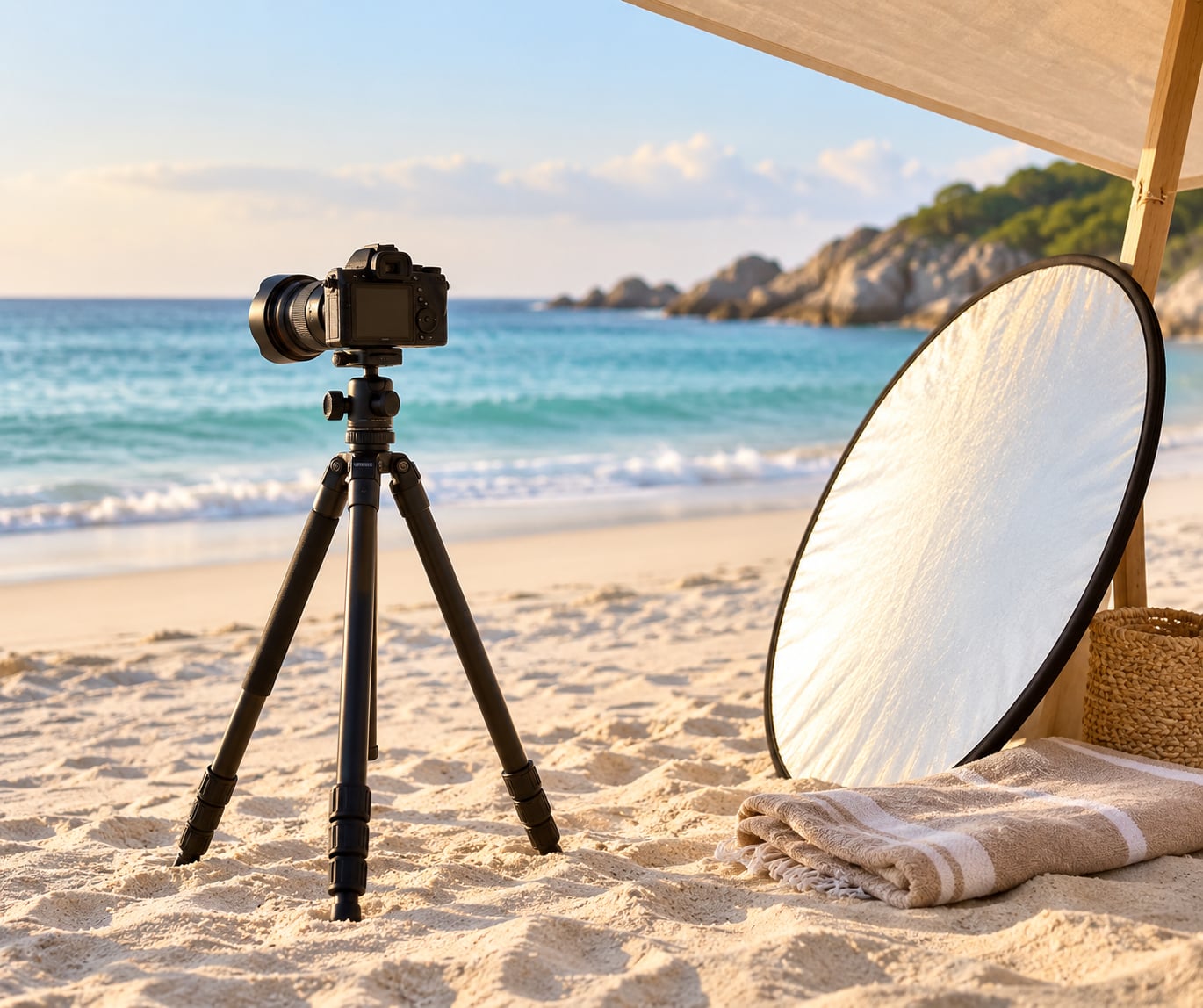
- Something to make fill. A reflector, a white t-shirt, or a piece of pale fabric. A small flash with a diffuser is the upgrade.
- A blower and a lens cloth. Sand and salt spray destroy a beach kit faster than any dropped body.
- Water for the subject. A relaxed face comes from a cool body, and a squint often just means thirst and glare.
Step-by-Step
How to Shoot Beach Portraits Without Squinting at the Edge of the Sun
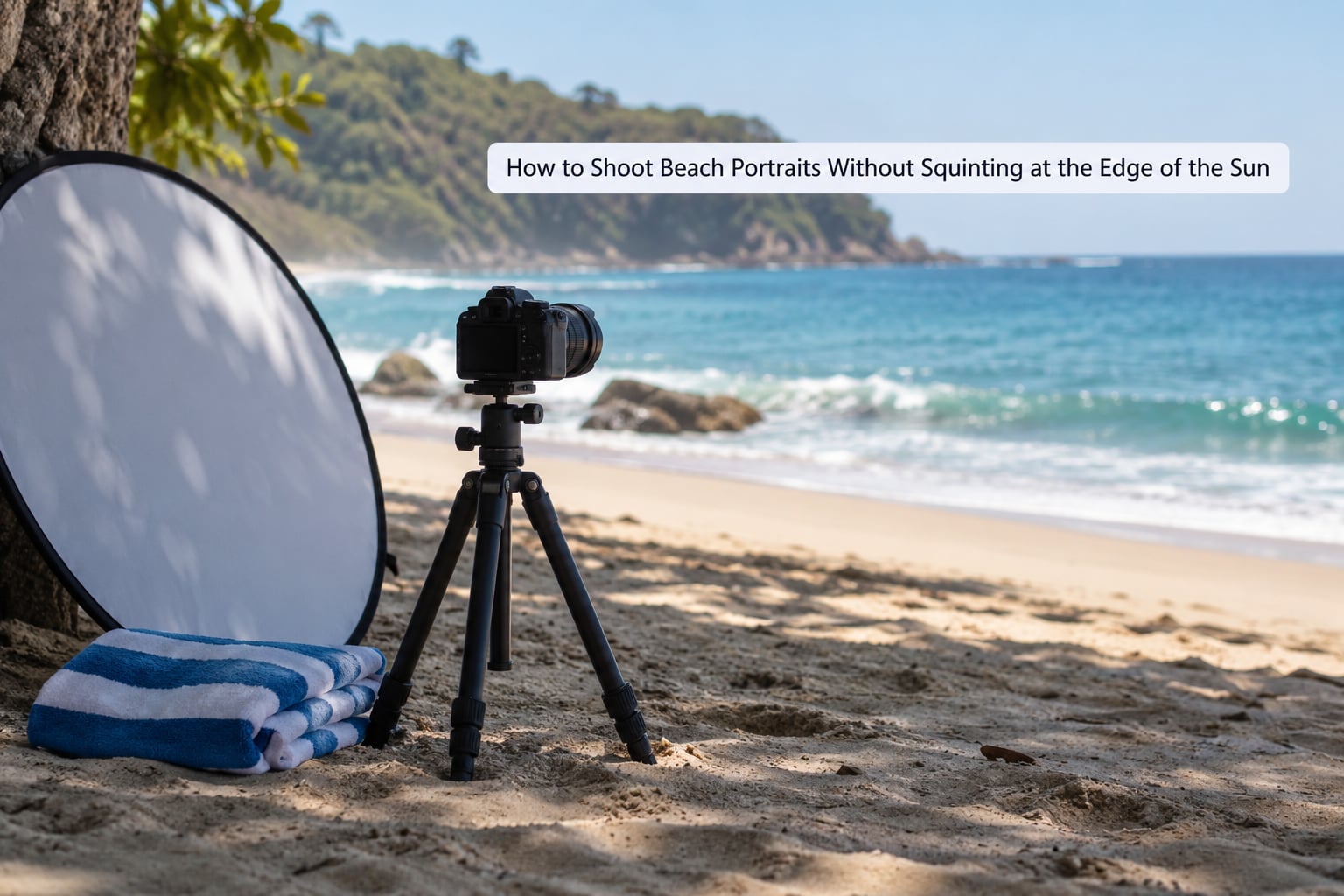
Arrive before your subject and walk the spot. Find where the shadow line falls and stand at its edge, where the face still catches skylight but the direct beam is blocked. That edge is the working zone for the whole session.
Open shade means shade with the sky still visible from the subject’s position, not a hard-edged shadow with the sun blasting into it. Umbrellas, towels held overhead and the soft shadow under a wide-brim hat all qualify. Dunes, cabanas and pier structures make the best ones because they are big enough to stand in.
Once the face is in shade, the squint problem is mostly solved. The next task is contrast, and a reflector held just below and slightly to the side of the face handles it in seconds. A white t-shirt or a pale towel works nearly as well at low sun angles, and photographers regularly use the bright sand itself as a giant bounce when a subject lies down.
If you have no shade at all, keep the sun off-axis instead. Amateur Photographer’s 45-degree rule is still the best single rule in outdoor portraiture: keep the light about 45 degrees to the side of the subject’s face rather than straight on, and the eyes stay relaxed without losing the brightness that makes beach light worth shooting.
How to Position Your Subject
The move that fixes most squinting is a body turn. Ask the subject to face the sun, then turn only the head back toward you. The torso shades the eyes, the face still reads three-quarter, and the background stays bright. On r/photocritique, photographers describe this single change as the difference between a painful frame and a usable one.
Then work the small stuff. Chin out and slightly down opens the eye sockets and softens the jaw. Hands busy, holding a hat or looking at something you point out, stops the blank stare. Never ask anyone to look at the sun, and don’t say relax; demonstrate the pose yourself, which is what sitters actually respond to.
| Sun position | Where the subject stands | Effect on the face | Extra gear needed |
|---|---|---|---|
| Behind you, straight on | Open, facing camera | Full squint, hardest case | Shade or flash |
| About 45 degrees off axis | Angled away from the sun | Relaxed eyes, defined shadows | Reflector |
| Side of the subject | Body to the sun, face back | Calm, three-quarter light | Nothing |
| Behind the subject | Back to the sea | No squint, rim light | Reflector or fill flash |
Backlighting is the squint-free option that also gives the best light on the beach, and it is the default answer on r/photography: put the sun behind the subject and you avoid the squint while gaining a rim of light along the hair and shoulders. r/AskPhotography pairs it with reflector fill, which is the version that works when the sun is unavoidably overhead.
Do watch the trade-off. Without fill, a backlit frame gives you either a silhouette or a blown-out background, and the DPReview forum makes the same point about having a subject face the sun directly. Silhouettes are a deliberate choice; blowouts usually are not.
How to Control Harsh Contrast and Wind
Auto exposure will get this wrong. The bright sea and white sand fool the meter into underexposing the person, which is the most common reason a sunny beach frame looks flat and dull. Switch to spot metering, meter off the face, and dial in exposure compensation to taste.
A workable starting point in full sun is aperture priority at f/2.8 to f/4, ISO 100, and the fastest shutter speed the light allows. Shoot RAW. The sunny f/16 rule is a useful yardstick when the scene is evenly lit, but a face in open shade is several stops below the sand around it, so meter the person rather than the scene.
Wind is the other thing that ruins a beach portrait. It pushes hair across the face and makes clothing snap in every frame. Either turn the body to break the wind, ask the subject to hold a hat or towel in both hands, or embrace it and shoot during movement when the hair is doing something worth capturing. Keep the reflector low and wide, not upright, or it becomes a sail.
With children, stop asking for poses. Shoot short bursts while they play, frame the moments between poses, and expect the best expression on the frame after the one you waited for. A group photo outdoors in bright sun usually fails for squinting and hard facial shadows, and neither gets better by pushing the group closer together.
Common Mistakes
- Shooting with the sun behind you. The subject gets a bright, even, fully squinting face. Angle off-axis or move into shade.
- Asking the subject to face the sun. It wins you rim light at the cost of a grimace. Turn the body to the sun instead and the face comes back to you.
- Trusting auto exposure in a bright scene. Sand and sea fool the meter. Use spot metering on the face and add compensation.
- Skipping the shade scout. Arriving with the subject and hunting for cover wastes the only hour when the light is cooperative.
- Using flash at full power. Daylight fill needs very little output, and a bare on-axis head at eye level is how you get raccoon eyes and a red-eyed squint. Bounce it, diffuse it, or skip it.
- Changing lenses on the sand. One dropped lens ends the session. Change lenses over your body, away from the towel line.
- Relying on post-production. Retouching cannot rebuild a real eyelid. Fix the position, then adjust the file.
Tips for Natural Beach Portraits
Scout before anyone arrives. Ten minutes walking the shoreline finds the cabana, the dune shadow or the pier shadow that turns a hard session into an easy one. Do it in the same light you will shoot in, because the shadow moves.
Watch the sun’s height, not the clock. In summer at mid-latitudes the sun is brutal from late morning until midafternoon, and the usable portrait window is short. Photographers who shoot at noon and complain about squinting are usually working two hours either side of what the light can do. Golden hour is easier and softer, but open shade solves noon.
Keep the subject comfortable. Water, a break in the shade, and a position that is not staring into glare will do more for the face than any filter. Forum sitters consistently rate being posed physically as better than being told to look natural.
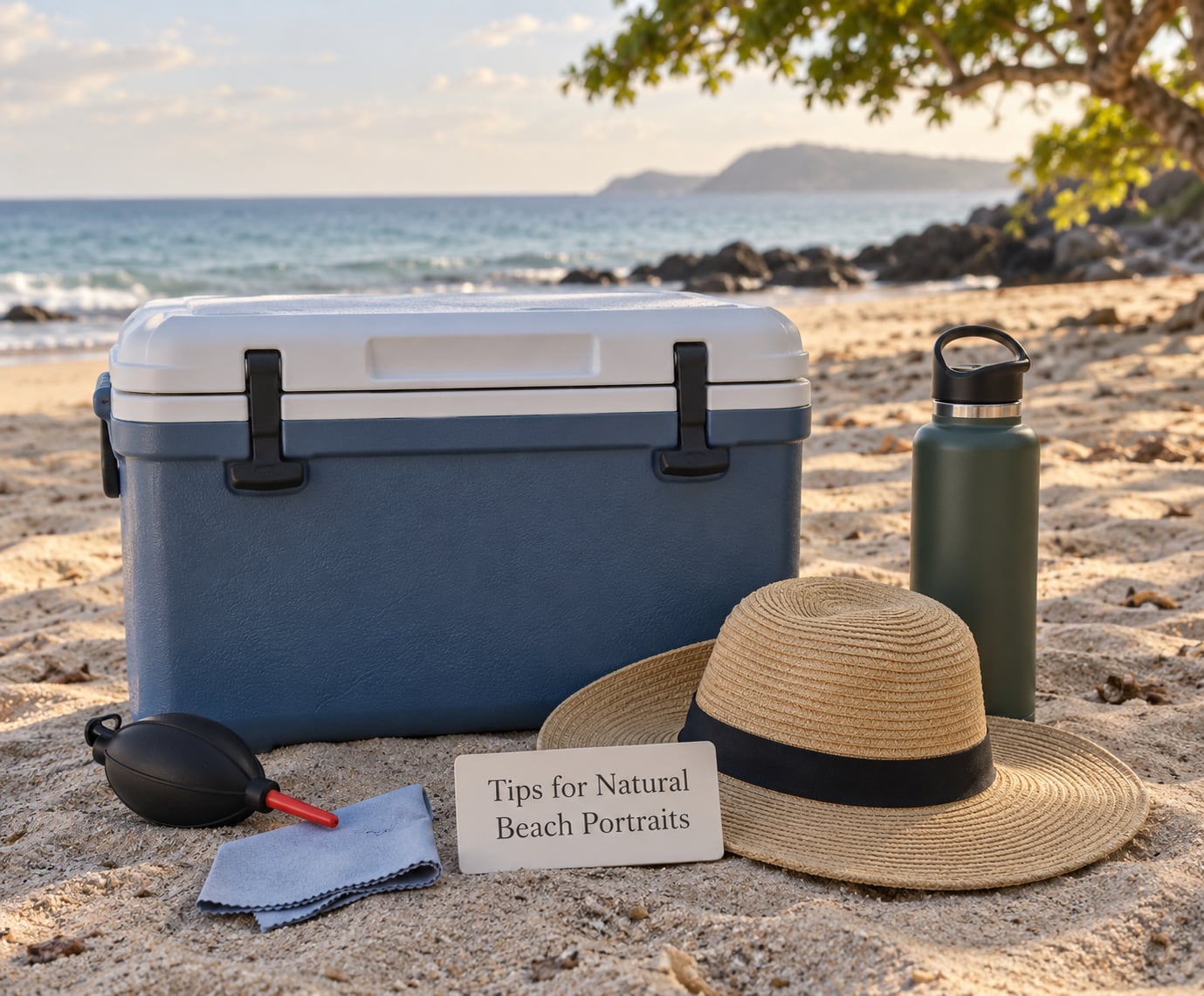
Protect the gear. Keep the bag closed inside a cooler, never the bare sand, and run a blower on the front element and the lens barrel before you pack. Salt spray dries into a film, and one change of lenses at the wrong moment is how it gets there.
Save post-production for correction, not rescue. A gentle lift under the lower lid, a small reduction in squint lines, and pulling blown sand back from the highlights will finish a good frame. Pasting a different eye into the face never looks right.
Frequently Asked Questions
How to avoid squinting in photos?
Keep the light off the subject’s face. Turn their body toward the sun and the face back toward the camera, work the edge of open shade, or hold the sun about 45 degrees off the camera axis. Add a reflector or low-power fill flash to lift the eye sockets once the sun is off-axis, and the face relaxes on its own.
What are some beach photo mistakes to avoid?
The usual ones are shooting with the sun directly behind you, asking the subject to face the sun, trusting auto exposure around bright sand and water, arriving without scouting for shade, and changing lenses on the beach. Add a bare on-axis flash at full power and you get raccoon eyes, which is the fifth common mistake.
Should you use flash on the beach?
Only as fill, and only after the sun is off the subject’s face. Daylight fill needs very little power, so bounce it off a wall or umbrella, or cover the head with a diffuser to spread it. A reflector solves the same problem for most sessions without any electronics at all.
Do sunglasses help or hurt a beach portrait?
They help the eyes, and they cost you the connection. Sunglasses cut glare and glare is what triggers the squint, so they work well for a candid frame on a bright day. For a portrait meant to show a face, take them off, put the subject in shade or turn them side-on, and use the frames as a prop instead.
What is the best time of day for beach portraits?
Early morning and the hour before sunset give the softest, warmest light and the least squinting. Midday is the hardest, but open shade from an umbrella, a towel or a dune shadow works at any hour, and a backlit frame with a reflector can look great even with the sun high.
What is the 20/60/20 rule in photography?
It is a composition guideline, not a lighting one. Put the main subject in roughly 20 percent of the frame, let elements of interest fill about 60 percent, and leave the remaining 20 percent as open space to look into. On a beach it keeps heads off the horizon line and stops portraits drifting into dead center.
Conclusion
Do this first: find open shade, place the subject at its edge, turn the body to the sun and the face back to you, then check the exposure on the face before anything else. Everything after that, reflector or flash or patience, is refinement on a face that was never asked to squint.